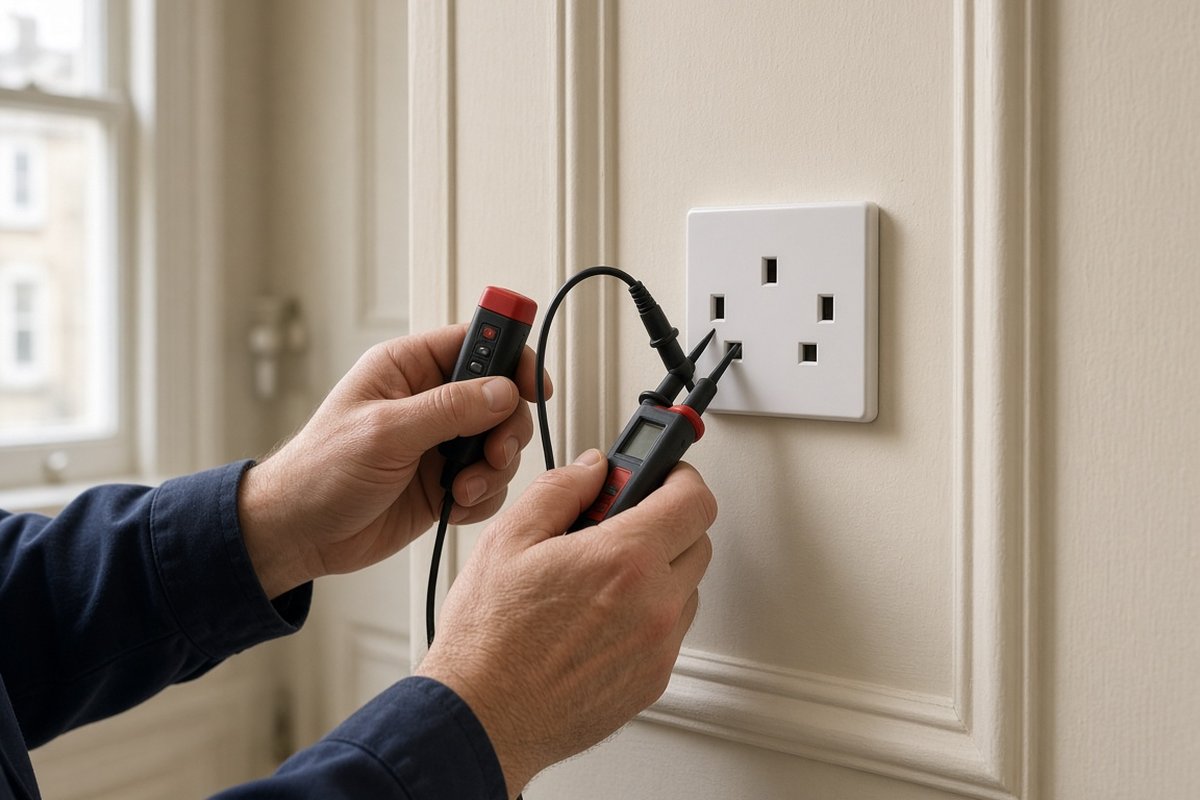
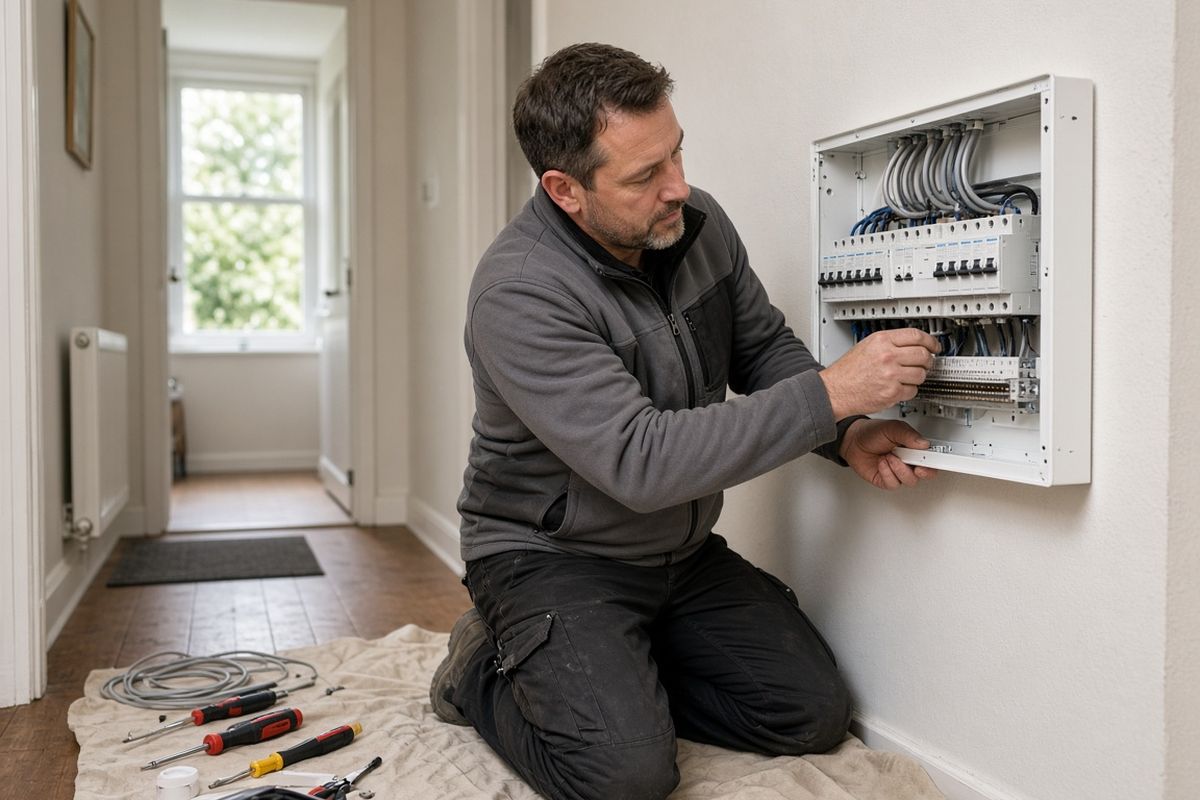
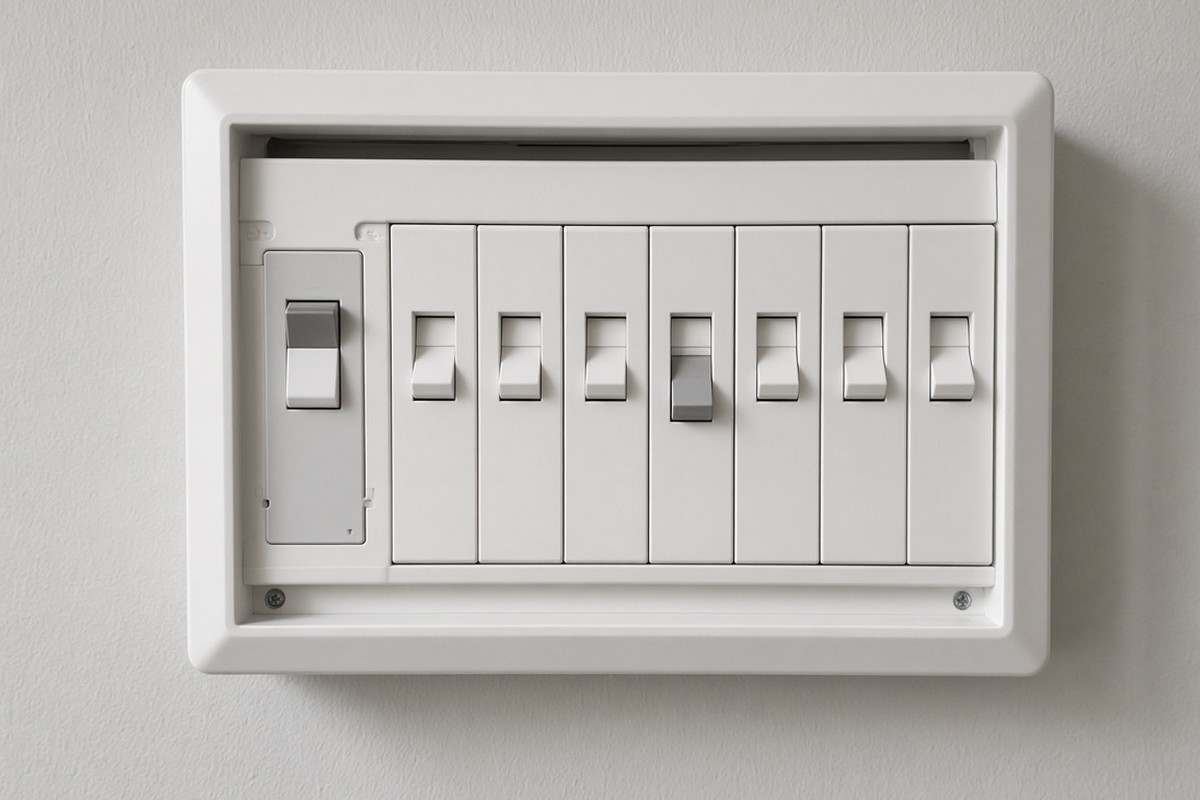
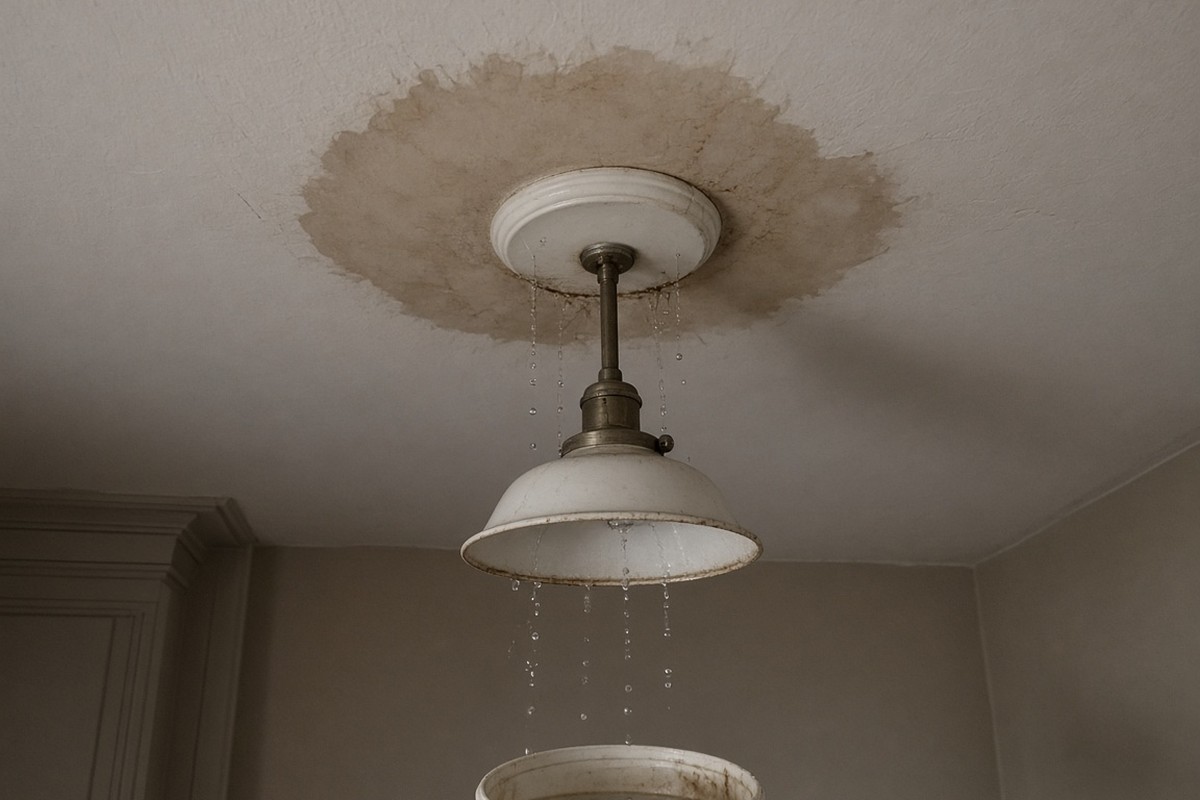
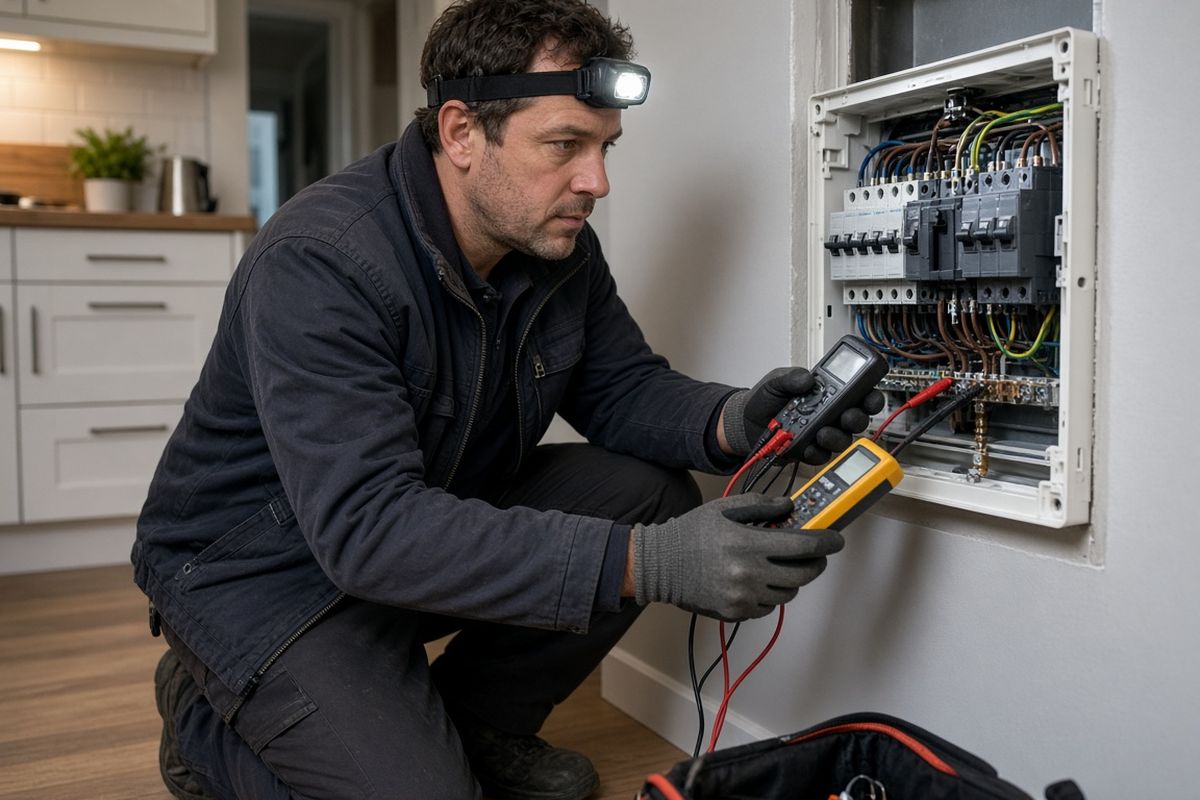
Plain answers from Emergency Electrician Bath for homeowners, landlords and tenants in Bath and the surrounding villages: what to do when the power goes off, why a fuse box keeps tripping, how EICR codes work, and how to deal with old wiring in Georgian and Victorian homes. Written with BS 7671 and current GOV.UK guidance in mind.
An EICR tests the fixed wiring; PAT testing checks plug-in appliances. What each covers, how often Bath landlords and businesses need them, and what they cost.
Why bathroom extractor fans fail, trip the lights or stay on, how bathroom zones and IP ratings work, and when a fan job needs a qualified electrician in Bath.
Nine common myths about fuse boxes, RCDs, extension leads and old wiring, checked against UK electrical safety guidance, plus what to do when something seems wrong.
What a homebuyer's survey says about the electrics, when to commission an EICR before exchange, what to ask the seller and how to negotiate when faults turn up.
Breakers that trip again a week after a "fix", lights that flicker again and sockets that fail twice: the usual reasons electrical faults return and how to make a repair last.
Whether you can live in your home during a partial or full rewire, how long the power will be off each day, and how to plan rooms, pets, work and heating around it.
How electricians safely isolate a circuit before working on it: identifying the supply, locking off, proving dead with an approved tester, and why switching off a breaker is not enough.
When it is fine to reset a tripped MCB or RCD, when it is a warning sign, how to find the faulty appliance yourself and when to stop and call an electrician.
What UK home insurance usually covers after an electrical fire, power surge or water-damaged electrics, the common exclusions, and the paperwork insurers ask for.
How flood water damages electrics, what to switch off and when, why wiring must be tested before power goes back on, and the official flood resources for Bath and the Avon valley.
How to rewire or repair electrics in a listed Bath townhouse without harming historic fabric: listed building consent, cable routes, period fittings and common problems room by room.
Typical rewire timelines for flats, terraces and large Bath townhouses, what slows a rewire down, how long the power is off and what happens after the electricians finish.
What to check before you let an emergency electrician in: registration, insurance, call-out pricing, certificates and warning signs, plus questions to ask on the phone.
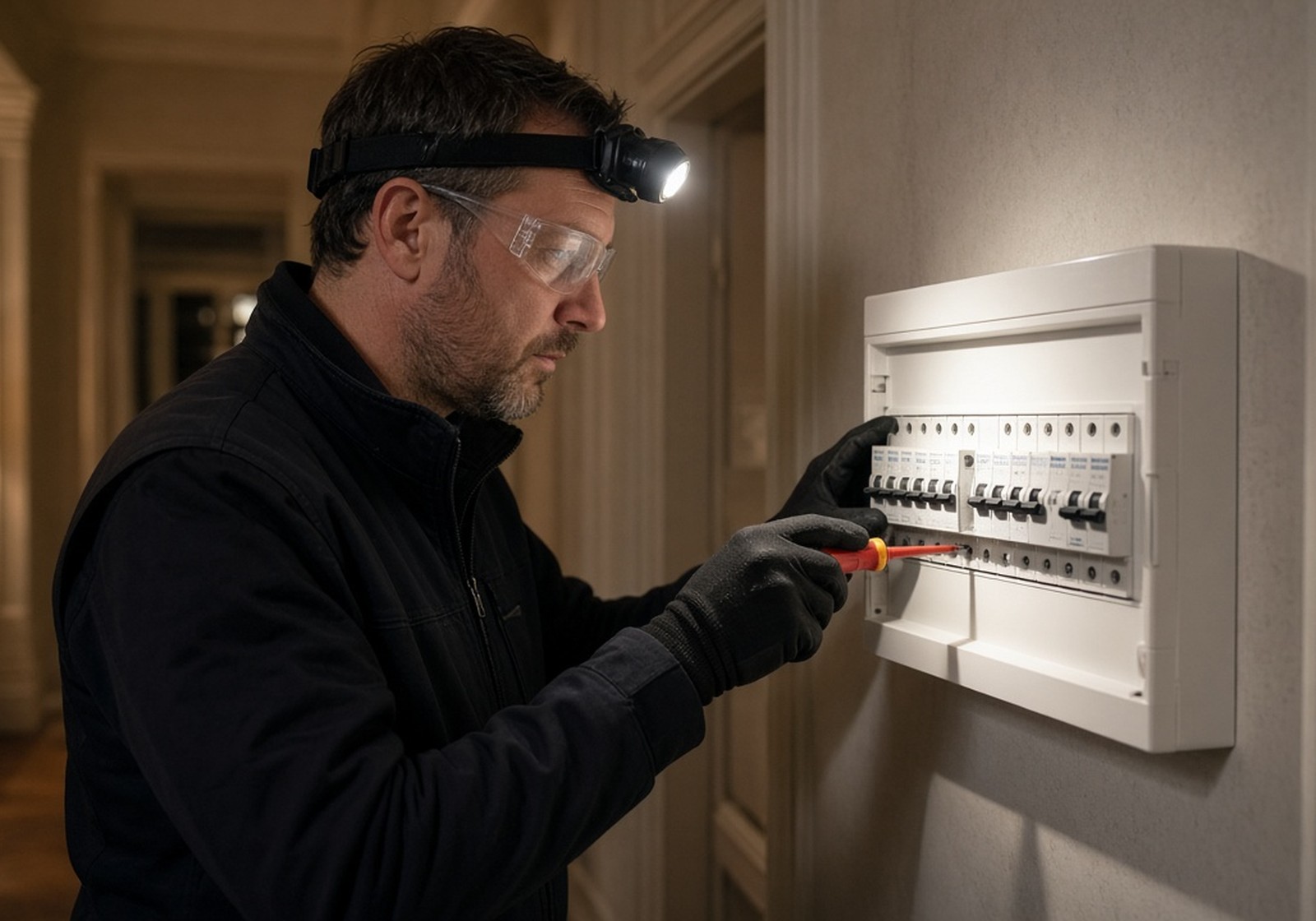
A step-by-step method to find which circuit or appliance is tripping your RCD or breaker, the clues that point to a wiring fault, and when to call an electrician in Bath.
What the C1, C2, C3 and FI codes on an Electrical Installation Condition Report mean, which ones fail the report, how quickly landlords must act and what typical fixes cost.
Which electrical jobs homeowners can legally do themselves in England, what counts as notifiable work under Part P, the safety gear and testing involved, and when to call an electrician.
What private landlords in Bath must do under the 2020 electrical safety regulations: EICR every five years, remedial deadlines, tenant copies, emergency repairs and records.
What insulation resistance testing measures, typical readings on healthy and faulty circuits, why water and age lower the numbers, and what electricians do with the results.
What to do immediately if water is coming through a ceiling light or downlight, how to make it safe, find the leak and when the circuit can be used again.
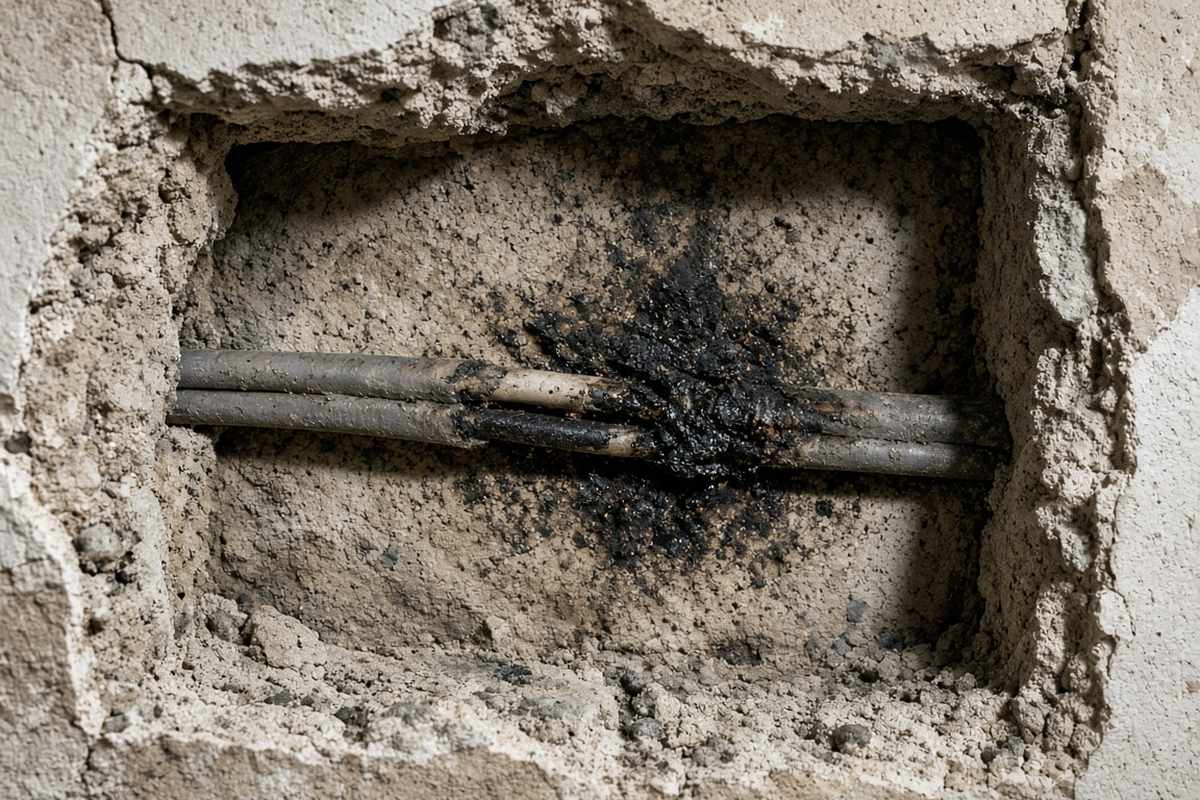
Warm patches, buzzing, discoloured faceplates and intermittent faults can point to wiring problems hidden in walls. How electricians find them without unnecessary damage.
Which certificate you should receive after electrical work, from Minor Works certificates to Electrical Installation Certificates and Building Regulations compliance certificates.
Why children and older people are more at risk from electrical accidents, the hazards to look for room by room, and simple changes that make a home safer.
Why electric showers trip the RCD, run cold or smell of burning, what the pull-cord switch and cable have to do with it, and when to repair or replace.
What happens when a roof leak soaks loft cables, junction boxes and downlights, how electricians test them, and when wiring can be dried rather than replaced.
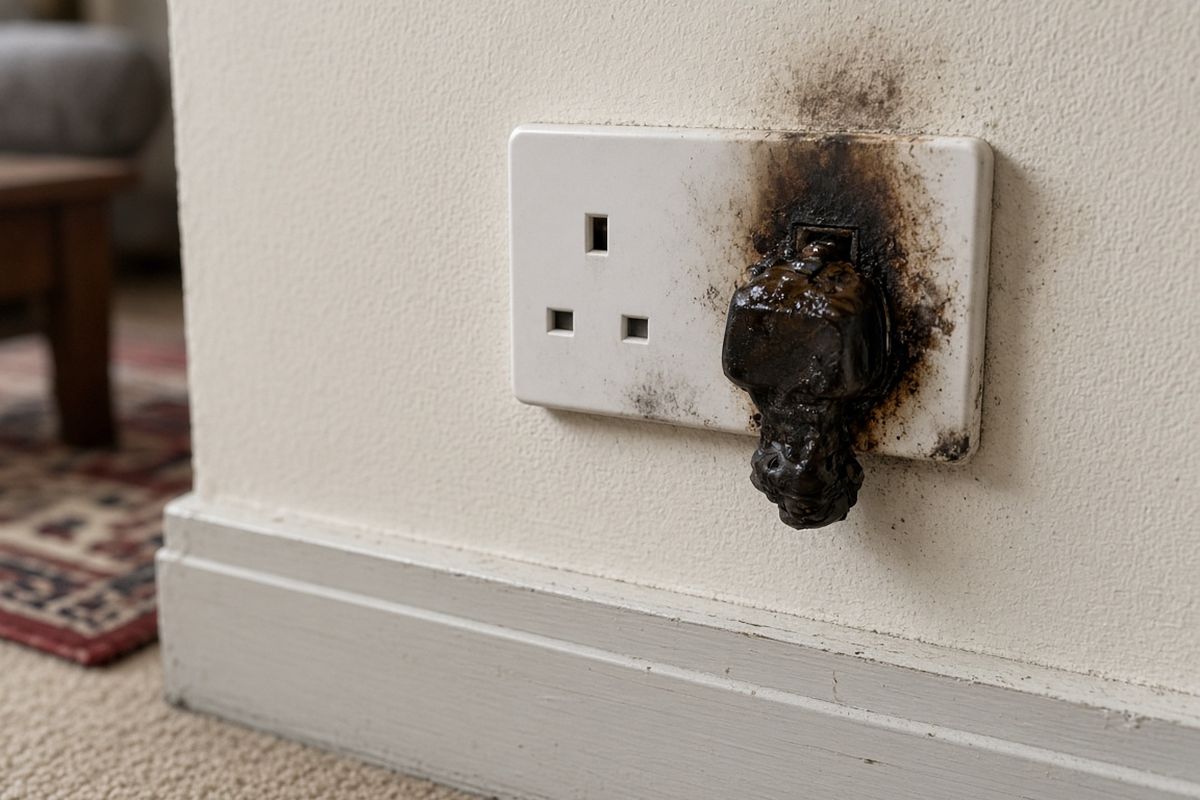
When a cracked, loose, scorched or broken socket can be fixed and when it must be replaced, plus what to check behind the faceplate and why scorching matters.
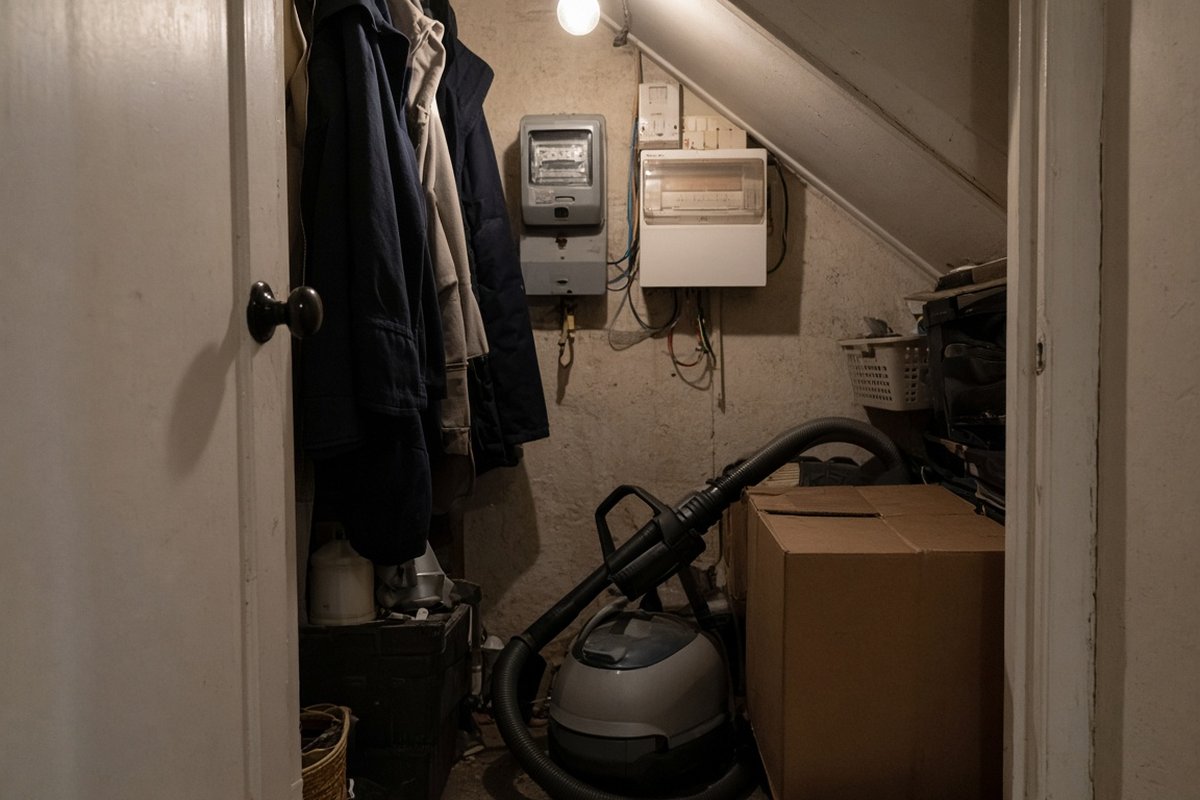
Why the under-stairs cupboard is a risky place for a cluttered fuse box, what clearance and access you need, signs of overheating and when to move or replace the consumer unit.
Common electrical snags in new build homes around Bath, from RCDs tripping and loose sockets to missing labels, and how to get them fixed under the developer's warranty.
What tenants renting in Bath can expect from their landlord on electrical safety, how to report faults, what counts as an emergency and where to go if repairs do not happen.
Why ceiling lights flicker, from incompatible LED bulbs and dimmers to loose connections and supply issues, how to narrow it down and when flickering is dangerous.
How to find which appliance is tripping your RCD, which appliances fail most often, when an appliance is worth repairing and when it should be replaced.
How outdoor sockets, garden lights and outbuilding supplies should be installed, why they trip in wet weather and the warning signs that mean an electrician should check them.
Why one or several downlights stop working, flicker or trip the lights, from failed LED drivers and old transformers to water from bathrooms above and overheating.
How nails, screws, rodents and joist notching damage cables under floors, the signs, how electricians locate the damage and when a run needs replacing.
How to rewire or add sockets in Bath homes with lime plaster, lath and stone walls, protecting historic plaster and choosing cable routes that avoid damage.
A fishy or burning plastic smell from a socket, switch or fuse box usually means overheating. What causes it, what to do immediately and how an electrician fixes it.
What an emergency electrician does differently from a planned-work electrician, what counts as an electrical emergency, how pricing differs and when you can wait until morning.
Why electric underfloor heating stops working or trips the RCD, how thermostats and floor sensors fail, how cable breaks are found and when a mat can be repaired.
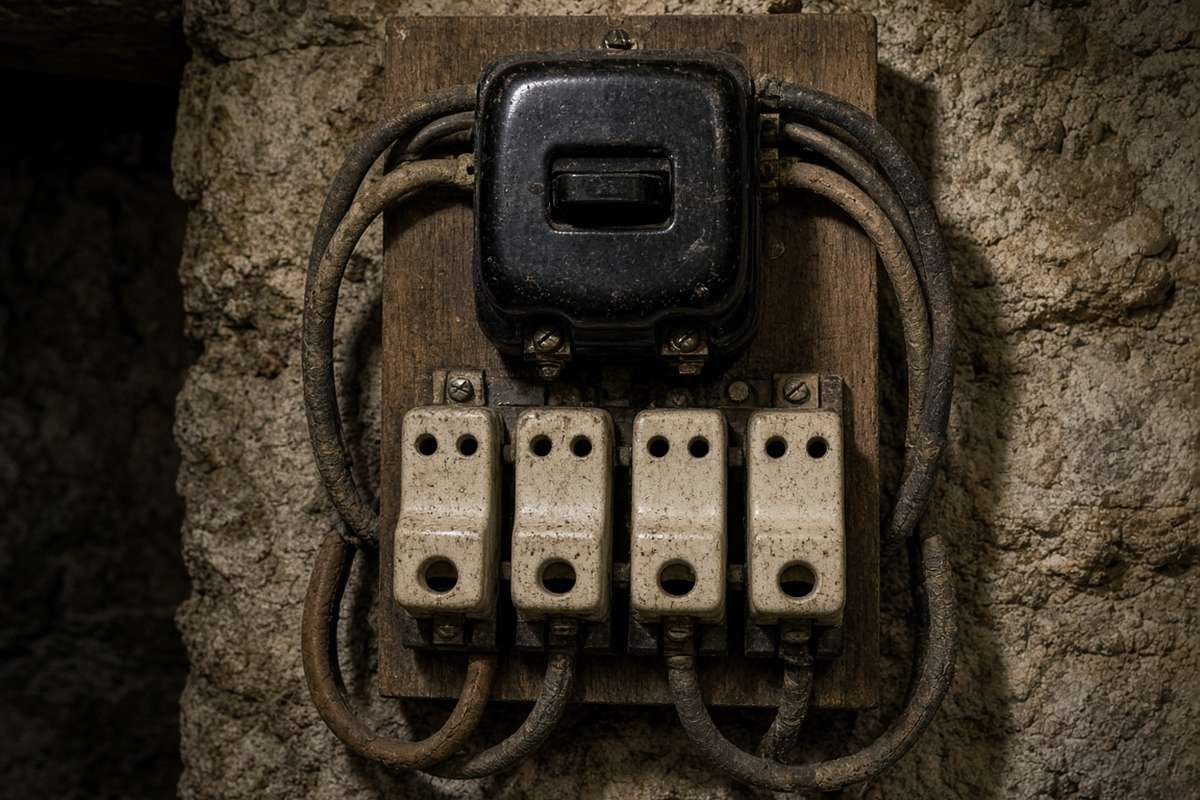
How to tell whether your home has rewireable fuses, cartridge fuses or circuit breakers, how each works, how to reset or replace them safely and when to upgrade.
What a buzzing, humming or crackling consumer unit means, the harmless and dangerous causes, what to check safely and when to call an emergency electrician.
What Part P of the Building Regulations requires in England, what is notifiable, how competent person schemes and building control notification work, and how it affects selling.
How to keep electrics safe in Bath holiday lets, short-term rentals, second homes and empty properties: inspections, PAT testing, smoke alarms and what to leave on or off.
Which electrical certificates buyers' solicitors ask for, what to disclose on the property information form, whether to get an EICR before listing and how to handle missing paperwork.
How to tell whether a power cut is just your property or the whole street, who to call (105 or an electrician), how to check your consumer unit and how to protect freezers and vulnerable people.
What a fair electrician's guarantee covers, common exclusions, the difference between workmanship and product warranties, scheme-backed insurance and the paperwork to keep.
How UK wiring colours changed from red and black to brown and blue, what mixed colours at the consumer unit mean, and why colour is only a rough guide to the age and safety of wiring.
Why a home EV charger trips the RCD or main fuse, overloads older supplies in Bath homes, and how load management, earthing and correct protection fix it.
The difference between a full EICR with testing and a quick visual check, what each finds and misses, prices in Bath, and which suits buyers, landlords and homeowners.
Old cable, buried junction boxes, downlights under insulation and rodents make lofts a common source of electrical faults in Bath. Warning signs and how to fix them safely.
Scorch marks, warm sockets, flickering lights and old fuse boxes: the warning signs of dangerous wiring in Bath homes, what they mean and when to call an electrician.
Damp vaults, old fuse boards and decades of add-on wiring make Bath cellars a common source of tripping and shocks. What goes wrong and how to fix it safely.
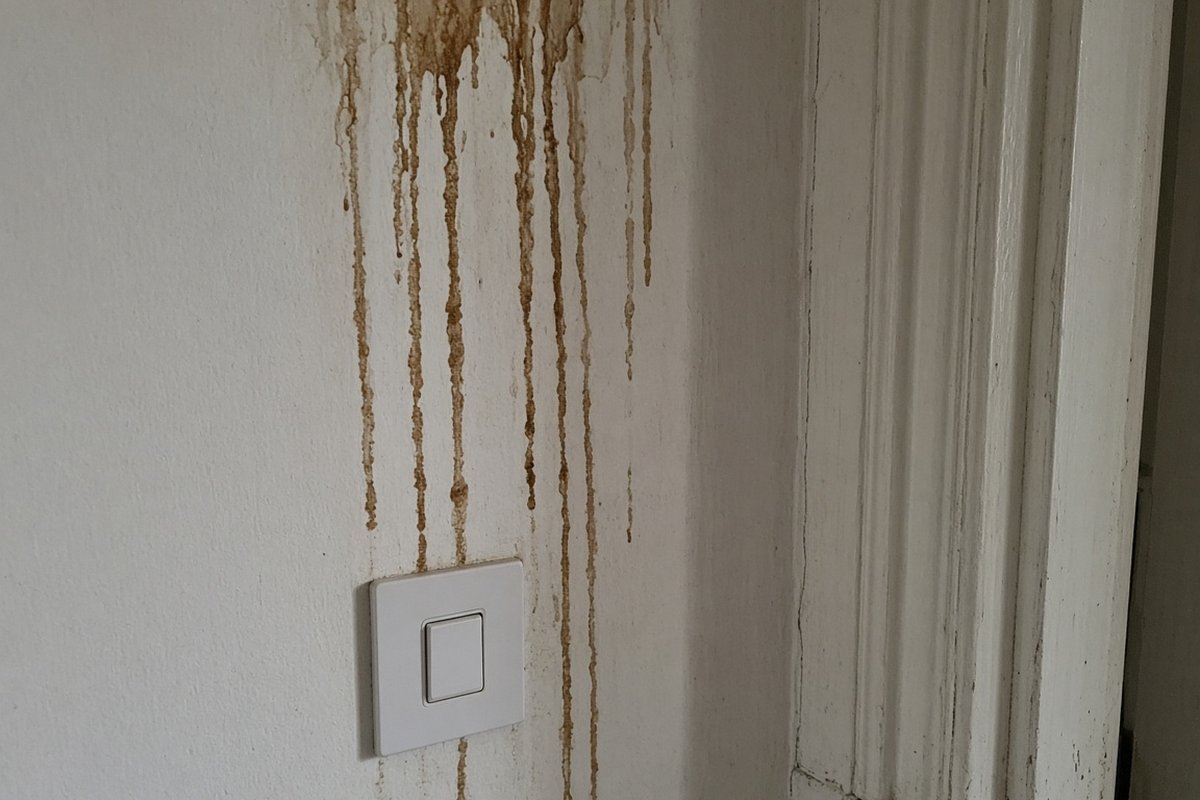
A step-by-step plan for electrics after a leak, burst pipe or flood in Bath: making safe, what to switch off, drying, testing and what usually needs replacing.
Each topic answers a question people in Bath ask before they call an emergency electrician.
💰
Costs & Insurance
Typical call-out prices, quotes and insurance cover
🏠
Fuse Boxes & Circuits
Tripping breakers, RCDs, old fuse boxes and upgrades
⚡
Electrical Safety
Warning signs, burning smells and safe habits at home
💧
Water & Electrics
Leaks, floods and wet electrics: what to do first
💡
Lofts & Lighting
Flickering lights, downlights and loft wiring
🔍
Testing & Certificates
EICRs, codes C1 to FI and certificates explained
Electrical Emergency? Talk to Us Now.
Call 07893 943507 for an emergency electrician in Bath. See how a call-out with us works, or call us. Our phone line is open 24/7, and every job starts with a price agreed before work begins.
Call 07893 943507 and tell us what has happened: what has tripped or stopped working, whether you can smell burning, and whether water is involved. An electrician from Emergency Electrician Bath comes to your Bath property, makes it safe, finds the fault and agrees the price with you before any repair starts.