
Is It Safe to Keep Resetting a Tripped Breaker? What Works and What Doesn't
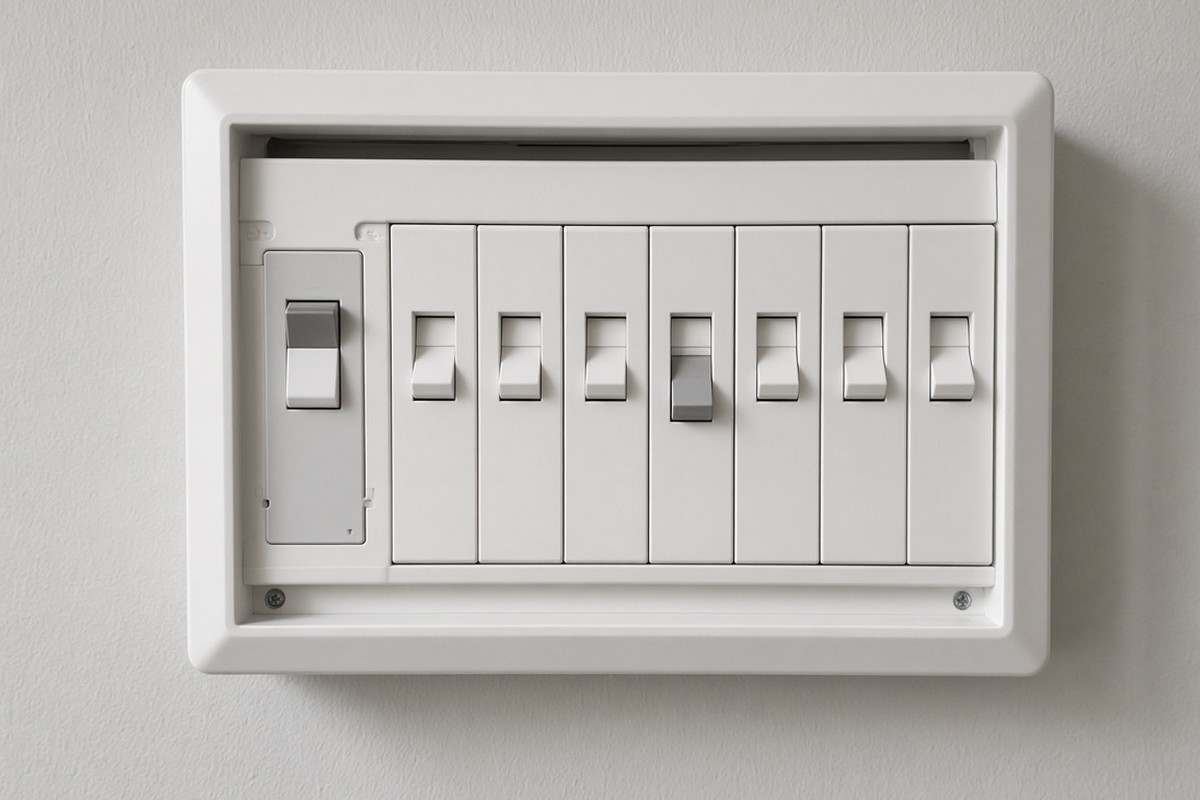
Resetting a tripped breaker or RCD once is normal and safe. Resetting it again and again when it keeps tripping is not, because each trip is the device reacting to a real fault. If it will not stay on, the job is to find out why, not to keep pushing the switch back up.
This guide explains what is happening when a breaker trips, how to do a safe reset, the simple checks you can do yourself and the point where you should stop.
What a Trip Is Telling You
- An MCB trips when a circuit draws too much current or there is a short circuit between conductors.
- An RCD trips when current is leaking to earth, which could be through damaged insulation, water, a faulty appliance, or a person.
- An RCBO trips for either reason on one circuit.
If you look closely at the consumer unit, the device that has switched to the down or off position tells you which kind of problem you are probably dealing with.
How to Reset Safely
- Make sure your hands are dry and you are not standing in water.
- Switch off or unplug things on the affected circuit.
- Push the tripped device fully down, then firmly up.
- If it stays on, plug appliances back in one at a time.
- If it trips immediately with nothing plugged in, leave it off.
Reading the Symptoms
Some faults are easy to pin down; others are not:
| Symptom | Likely cause | What to do |
|---|---|---|
| Trips when one appliance is switched on | The appliance | Stop using it, get it repaired or replaced |
| Trips when several heavy loads run | Overload | Spread the load, consider an extra circuit |
| Trips in wet weather | Water ingress | Call an electrician |
| Trips at random with everything unplugged | Fixed wiring fault | Call an electrician |
| Will not reset at all | Persistent fault | Leave it off and call an electrician |
Finding the Faulty Appliance
The unplug-and-reset method finds most appliance faults:
- With the RCD or breaker off, unplug every appliance on that circuit (or the whole house if it is the main RCD).
- Reset the device.
- Plug in and switch on appliances one at a time, waiting a minute between each.
- When it trips, the last item plugged in is the prime suspect.
Washing machines, dishwashers, kettles, immersion heaters, outdoor lights and old fridges are the usual culprits.
When to Stop
Stop resetting and call an electrician if:
- It trips immediately with everything unplugged
- You smell burning or see scorching
- You hear buzzing from the consumer unit
- There is water near any electrics
- You have had a tingle or shock from anything
Never Do These
- Tape or wedge a breaker or RCD in the on position
- Swap a breaker for a higher-rated one
- Replace a blown fuse with a bigger fuse or fuse wire
- Bypass the RCD
All of these remove the protection that stops a fault becoming a fire or a shock.
Frequently Asked Questions
Can a breaker wear out from too many trips?
Yes. Breakers and RCDs are mechanical and can weaken, especially after many trips under fault conditions. A tired device can start tripping on normal loads or, worse, fail to trip.
Is it normal for the RCD to trip in a thunderstorm?
Voltage surges can cause occasional trips. If it happens often, a surge protection device may help, and an electrician should check for underlying leakage.
Why does my breaker trip when I use the kettle and toaster together?
Usually because the kitchen circuit is overloaded or one of the appliances is faulty. Try each on its own.
Should I call an emergency electrician for a tripped breaker?
If it will not reset, the whole house is off, or there is any burning smell or water involved, yes.
Stuck With Something That Keeps Tripping?
Our fuse box tripping repair service finds and fixes the cause in Bath homes, day or night. Contact us or call now.