
Ceiling Lights Flickering: Loose Bulb, Faulty Dimmer or Wiring Fault?
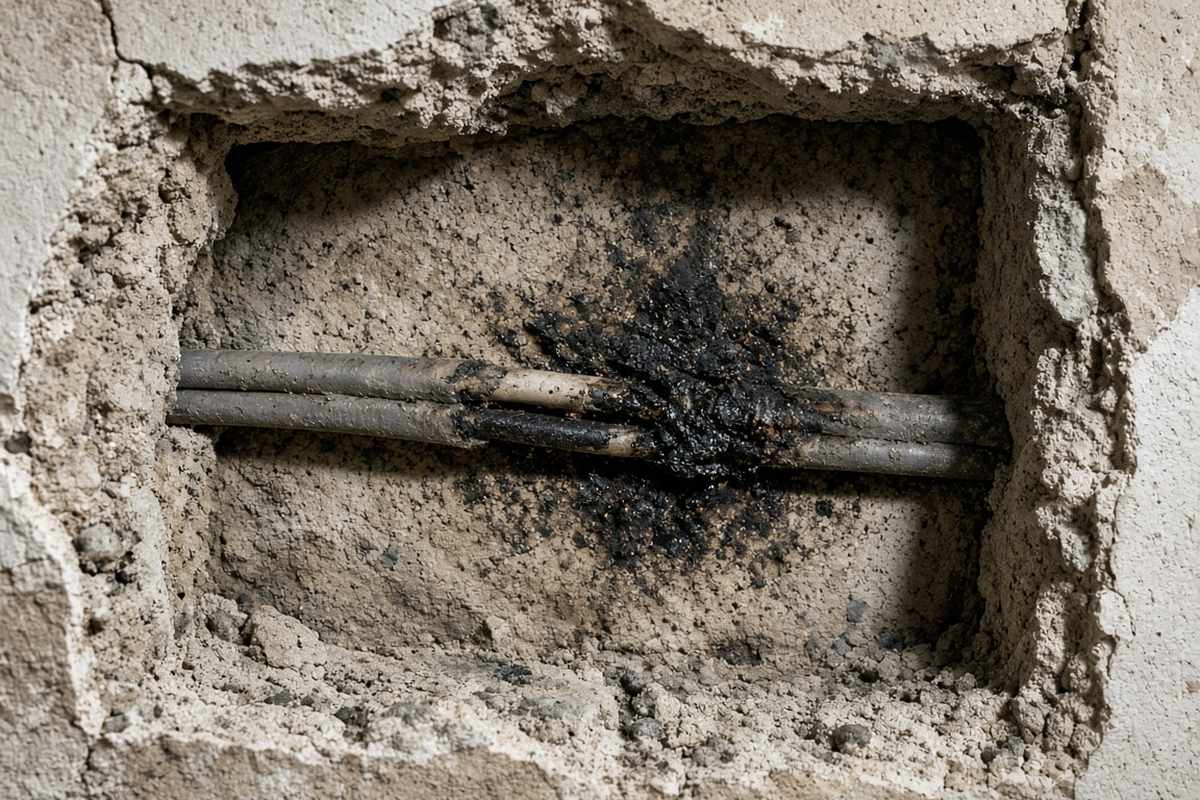
Flickering ceiling lights are irritating, and occasionally a warning. Most flicker comes from the lamp, an incompatible dimmer or a poor connection in the fitting, but some comes from a loose joint in the circuit or a problem with the supply. This guide explains how to narrow it down, which causes are harmless and which mean the lights should not be used until they are checked.
Start With the Pattern
| Pattern | Likely cause |
|---|---|
| One light flickers | Lamp, lamp holder or connection at that fitting |
| All lights on one switch flicker | Dimmer, switch or connection on that circuit |
| All lights in the house flicker | Supply issue, main connection, or large load starting |
| Flicker when a big appliance starts | Voltage dip, sometimes a loose main connection |
| Flicker when someone walks on the floor above | Loose connection in the ceiling void |
| Flicker with buzzing or smell | Arcing at a loose connection: switch off |
The Lamp
Start simple. A lamp near the end of its life, a lamp not seated properly or a cheap LED with a poor driver can flicker. Switch off, let the fitting cool, and try a known good lamp of the right type.
LED lamps sometimes flicker faintly when switched off, because a small current passes through an illuminated switch or a dimmer. This is usually harmless but annoying; a different lamp or switch can fix it.
Dimmers and LEDs
Many flickering problems start after changing from halogen or incandescent lamps to LEDs. Older dimmers are designed for higher loads. With LEDs, they can cause flicker, buzzing, or lights that will not dim smoothly. The fix is:
- Check the LED lamps are marked dimmable.
- Check the dimmer is rated for LED loads and the total wattage is within its range.
- Replace the dimmer with an LED-compatible type if needed.
Loose Connections
A loose connection at a switch, ceiling rose, fitting or junction box can cause flicker. These are more serious, because a loose connection can overheat and arc. Signs include:
- Flicker that changes when you tap the switch or someone walks upstairs.
- A buzzing or crackling sound.
- A warm switch or ceiling rose.
- A faint burning smell.
If you notice any of these, switch off the circuit and call an electrician. See burning smell from a socket or switch.
Old Ceiling Roses and Fittings
In older Bath homes, ceiling roses may be decades old, with brittle flex and loose terminals. Heavy chandeliers and fittings can pull on connections. A fitting that has been changed several times may have damaged cable ends. Replacing the rose and remaking connections often solves flicker in period rooms.
Whole-House Flicker
If every light flickers, look at the bigger picture:
- Large appliances starting: a brief dip when a shower, oven or heat pump starts can be normal, especially on long supplies.
- Loose main connection: a loose neutral or main connection can cause lights to brighten and dim. This is dangerous and needs urgent attention.
- Network problem: if neighbours have the same issue, contact the network operator on 105.
When Flicker Is Dangerous
Treat flicker as urgent if it comes with:
- Buzzing or crackling.
- A burning smell.
- Scorching on a switch or fitting.
- Lights getting brighter than normal, then dimmer.
- Warm switches or sockets.
Switch off the circuit and call an emergency electrician.
What an Electrician Does
- Checks the lamps and dimmers.
- Isolates the circuit and opens switches and fittings to check connections.
- Tests the circuit for loose joints and high resistance.
- Checks the supply voltage and main connections if the whole house flickers.
- Repairs connections, replaces faulty fittings and retests.
See downlights not working: causes.
Frequently Asked Questions
Why do my LED lights flicker?
Usually an incompatible dimmer, a cheap lamp or a loose connection.
Is flickering a fire risk?
It can be if it is caused by a loose connection. Get it checked.
Why do my lights flicker when the shower comes on?
A small voltage dip is common. Severe or worsening dips should be checked.
Can I fix it myself?
You can change lamps. Wiring and dimmer faults should be dealt with by an electrician.
Lights Flickering?
Our fault finding service traces lighting faults across Bath. Call us.