
Outside Lights Tripping in the Rain: Trapped Water, Seals and Cable Faults
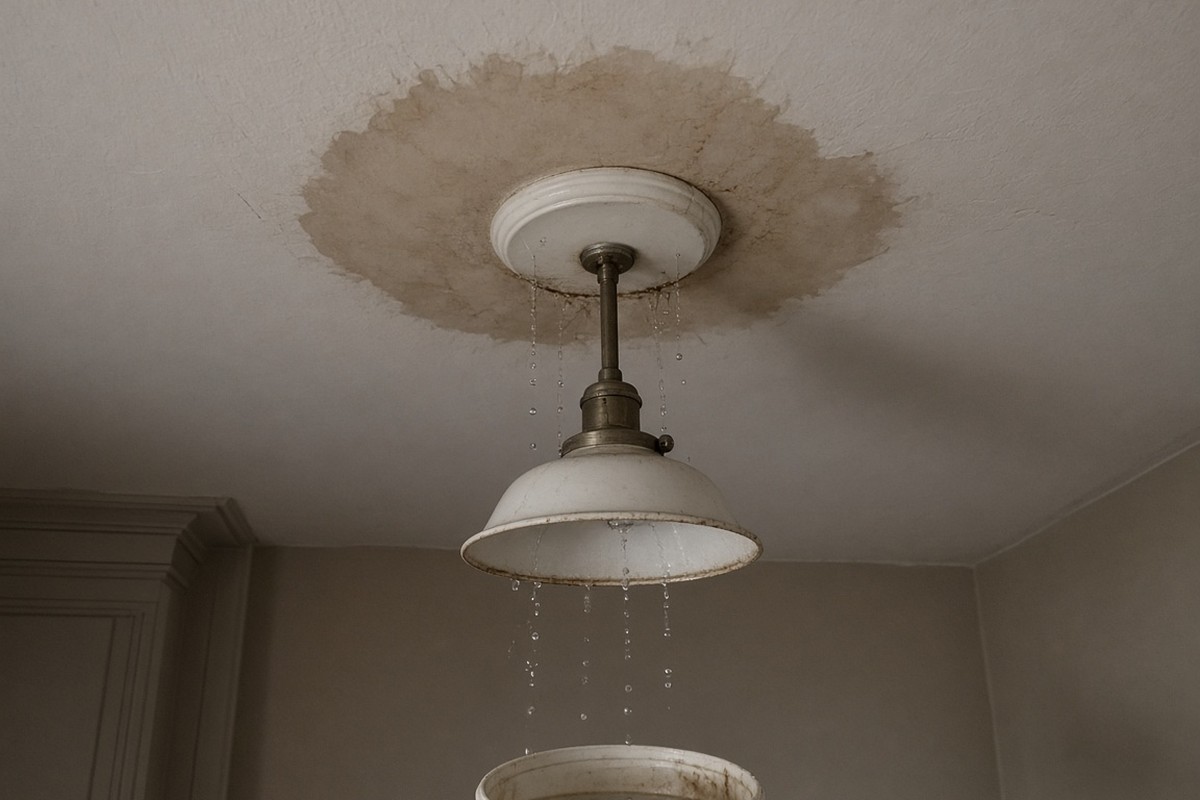
If your RCD trips every time it rains, the outside lights are one of the first places to look. Water gets into fittings through tired seals, cable entries, cracked lenses and badly angled PIR sensors, and once it reaches live parts it leaks current to earth. This guide explains how water gets in, how to confirm the outside light is the culprit, what you can safely check yourself and how an electrician fixes it so it stays fixed.
Why Rain Trips the RCD
An RCD (residual current device) compares the current going out on the live conductor with the current coming back on the neutral. If some of it is escaping to earth, for example through water bridging a terminal to a metal case, the RCD switches off in a fraction of a second. That is what it is designed to do: the same leak through a person could cause a serious shock.
Outside lights are exposed to wind-driven rain, temperature changes and sunlight. Over the years, gaskets harden, plastic lenses crack and cable glands loosen. Water that gets in sits in the bottom of the fitting or tracks along the cable into a junction box. The trip only happens when the water reaches live parts, which is why it can be intermittent: wet evenings, heavy showers, or rain from one particular direction.
The Usual Entry Points
| Entry point | What goes wrong | What to look for |
|---|---|---|
| Lens or diffuser seal | Rubber gasket perishes or is missing | Water droplets or tide marks inside the lens |
| Cable entry | Gland loose or no gland fitted | Water tracking down the cable into the fitting |
| PIR sensor | Sensor head angled upwards collects water | Corrosion inside the sensor |
| Back box or junction box | Not rated for outdoor use | Rust, green corrosion on terminals |
| Wall surface | Fitting mounted over a rough stone surface without a seal | Water running behind the fitting |
| Lamp holder | Old halogen holders crack with heat | Brittle or broken holder |
Bath stone walls
Bath stone is porous and often uneven. A fitting screwed onto a stone wall without a proper seal can let water run in behind it. Mounting blocks or sealing pads made for outdoor fittings help.
Confirming the Outside Light Is the Cause
You can do a simple, safe check:
- When the RCD trips, switch off every breaker under that RCD.
- Reset the RCD.
- Switch the breakers back on one at a time. The one that trips the RCD is the faulty circuit.
- If it is the lighting circuit and the trip only happens in wet weather, the outside light is a strong suspect.
Some homes have the outside light on its own breaker or a fused spur. If you can isolate just the outside light and the trips stop, you have found it. Do not open the fitting while the circuit is live, and do not keep resetting if it trips repeatedly. See how to find what is tripping your electrics.
What Not to Do
- Do not leave the RCD switched off to stop the trips; that removes protection from everything on it.
- Do not tape over the fitting or seal it with silicone while wet; trapped water makes it worse.
- Do not replace an outside light with an indoor fitting, or with one that has the wrong IP rating.
- Do not use an extension lead from inside to power garden lights temporarily.
IP Ratings Explained
Outdoor fittings are rated with an IP code. The first number is protection against solids, the second against water. For most outside walls, IP44 is the minimum; for exposed positions, IP65 or higher is better. A fitting in the direct path of rain, a downpipe or a sprinkler needs a higher rating.
| Rating | Protection against water | Suitable for |
|---|---|---|
| IP44 | Splashing water from any direction | Sheltered porches and covered walls |
| IP54 | Splashing water, plus dust protection | General outdoor walls |
| IP65 | Low-pressure water jets | Exposed walls, garden lights |
| IP67 | Temporary immersion | Ground-level lights, uplighters |
How an Electrician Fixes It
A proper repair usually involves:
- Isolating the circuit and testing the outside light and its cable to confirm the fault.
- Opening and drying the fitting, checking for corrosion and damaged parts.
- Replacing the fitting if the seals, lens or lamp holder have failed, using one with the right IP rating.
- Fitting a proper cable gland and a drip loop so water runs off the cable rather than into the fitting.
- Sealing the fitting to the wall with a mounting block or seal, and leaving drainage where the manufacturer specifies.
- Testing the circuit before restoring power.
Where the outside light shares a circuit with the indoor lights, an electrician may suggest putting it on its own RCBO, so a future fault does not plunge the house into darkness.
PIR Floodlights and Sensors
PIR sensors are a common source of trouble. The sensor head should point down or horizontally, never up, so water cannot sit in it. Cheap floodlights often fail within a few years outdoors. A good quality fitting with a separate sensor is often more reliable.
Garden Lights, Sockets and Outbuildings
If the trips continue after the outside light is fixed, look at other outdoor electrics: garden sockets, pond pumps, shed supplies and festive lights. Each is a possible route for water. See outdoor sockets and garden electrics.
Frequently Asked Questions
Why does my RCD only trip at night when it rains?
Outside lights often only switch on at night. When the fitting is off, water may sit harmlessly; when it switches on, the wet parts become live and current leaks to earth.
Can I just replace the bulb?
If the lamp holder is cracked or there is water in the fitting, a new bulb will not help. The fitting needs drying, checking and probably replacing.
Is it dangerous to touch a wet outside light?
Yes. Do not touch it while it is wet and powered. Switch off the circuit first.
How much does it cost to fix?
Usually a short visit and a new fitting. See our cost guide.
RCD Tripping Every Time It Rains?
We trace and fix outdoor faults across Bath. See fuse box tripping repairs or call us.