
The Fuse Box Under the Stairs: Why Clutter and Heat Cause Problems and How to Fix It
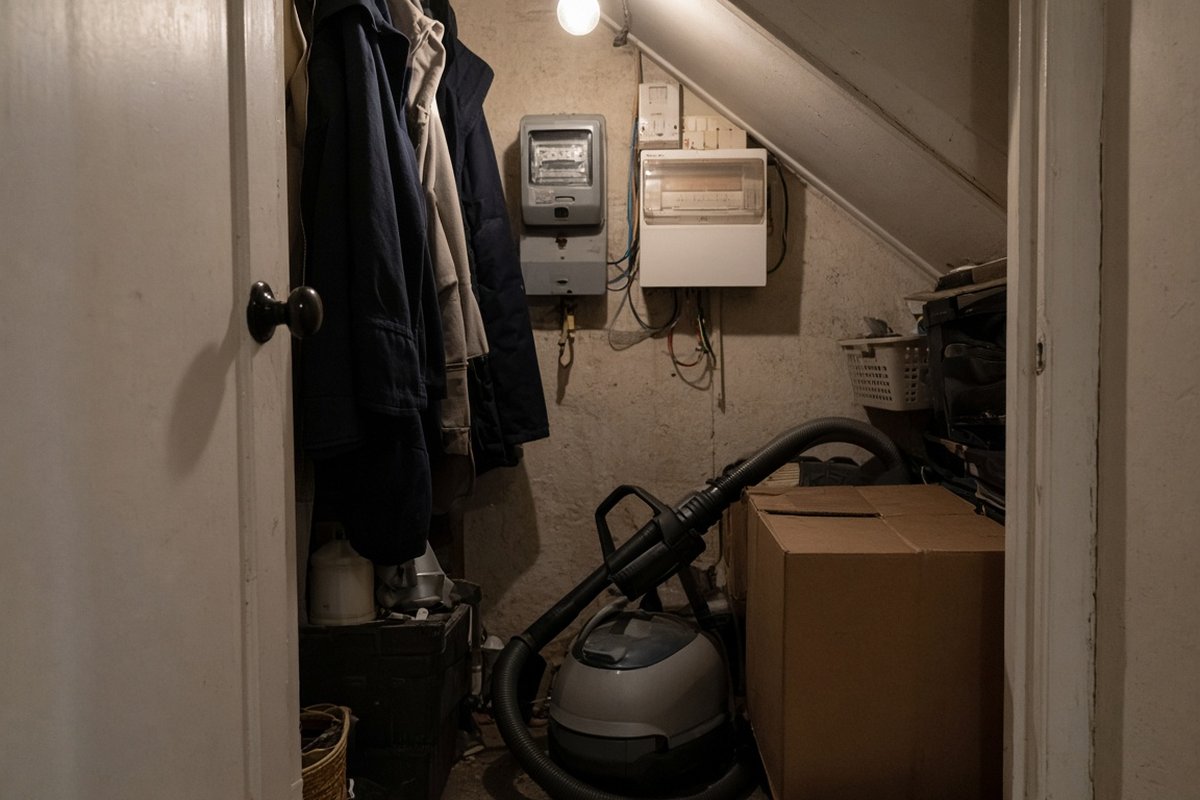
In many Bath homes, the fuse box or consumer unit is in the cupboard under the stairs, often alongside the gas meter, the electricity meter, coats and household clutter. That location is convenient but brings its own risks. This guide explains what is in the cupboard, how to use it safely in an emergency and when the board should be moved or replaced.
What Is in the Cupboard
| Item | Who owns it | What it does |
|---|---|---|
| Service head (cut-out) with the main fuse | Network operator | Connects your home to the supply |
| Electricity meter | Your supplier | Measures use |
| Meter tails | You | Connect meter to consumer unit |
| Isolator switch (if fitted) | You | Lets the supply be switched off for work |
| Consumer unit or fuse box | You | Protects circuits |
| Gas meter (often) | Gas supplier | Measures gas |
Never touch the service head or main fuse. If it is damaged, call 105.
Using the Board in an Emergency
- Clear the way to the board, keeping a torch nearby.
- Know where the main switch is: usually a large switch at one end.
- Label circuits clearly.
- Know how to reset a tripped breaker or RCD.
Risks of an Under-Stairs Location
- Escape route: a fire at the board can block the stairs, the main escape route.
- Clutter: coats, boxes and paper near the board are a fire risk.
- Damp: under-stairs cupboards on outside walls or above cellars can be damp.
- Access: a board behind clutter is hard to reach in an emergency.
- Combustible boards: older plastic or wooden boards offer less fire protection.
Since 2016, new consumer units in homes must have a non-combustible enclosure, usually metal. This is partly because so many boards are under stairs.
Keeping It Safe
- Keep at least the area in front of the board clear.
- Do not store flammables, paint or paper in the cupboard.
- Do not hang coats over the board.
- Fit a smoke alarm in the hall.
- Check for damp or signs of rodents.
Signs of a Problem
- Burning smell or scorch marks.
- Buzzing or crackling.
- A warm board.
- Frequent trips.
- Old fuse carriers or a wooden back board.
See buzzing noise from fuse box and fuse vs circuit breaker.
Should the Board Be Moved?
Moving a consumer unit is possible but involves extending meter tails and possibly circuits. It is usually done during a rewire or consumer unit replacement. Moving the meter itself needs the supplier and network operator. In listed buildings, any visible change needs care.
Replacing an Under-Stairs Board
A replacement metal consumer unit with RCBOs or dual RCDs fits in the same position. Circuits are tested first. See consumer unit replacement and consumer unit size guide.
Flats and Communal Meters
In Bath's converted townhouses, meters may be in communal hallways or cellars, with the consumer unit in the flat. Know where both are.
Frequently Asked Questions
Is it dangerous to have the fuse box under the stairs?
Not in itself, but keep it clear and make sure the board is in good condition.
Can I store things in the cupboard?
Yes, but keep the area around the board clear and avoid flammables.
Can my electrician move the meter?
No. The supplier or network operator must.
Do I need a metal consumer unit?
New boards in homes must be non-combustible.
Problem With Your Board?
Call us for urgent help across Bath. See fuse box tripping repairs.