
Why Cellar Electrics in Old Bath Homes Cause Faults (and How to Fix Them)
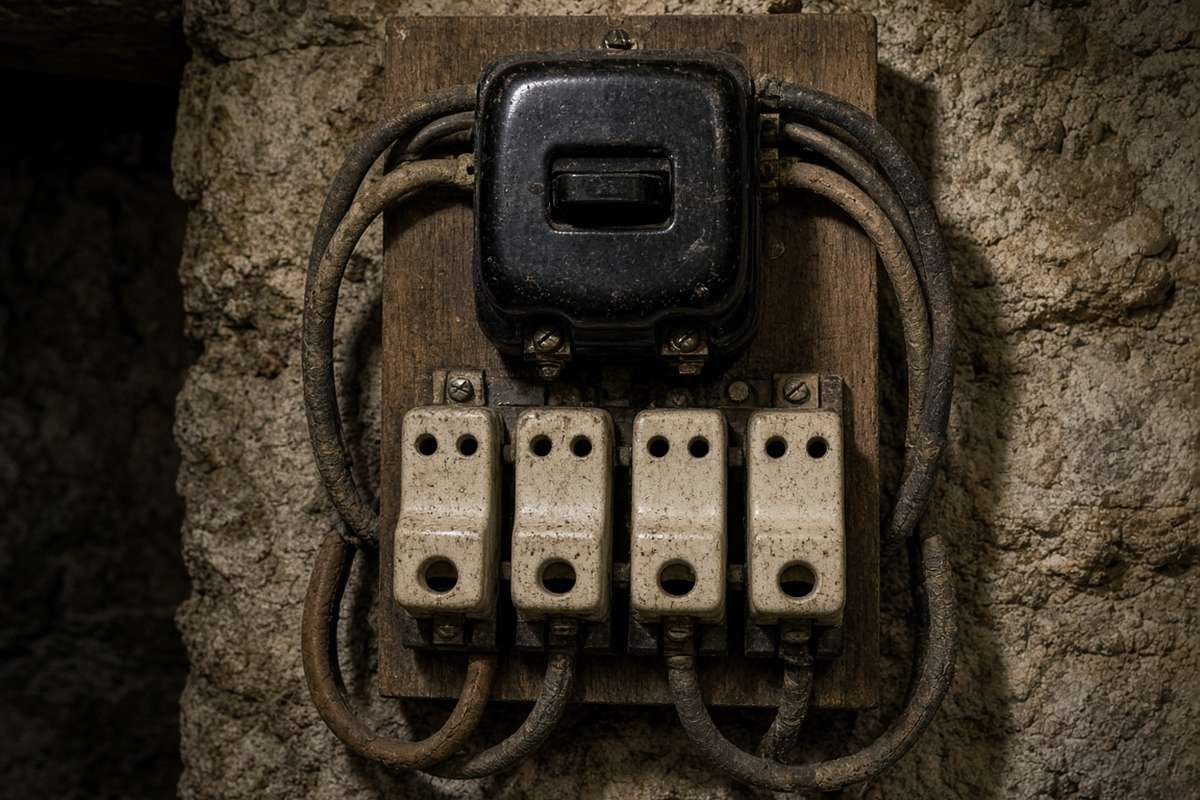
Many of Bath's Georgian and Victorian houses keep their electricity meter, main fuse and fuse board in the cellar or front vaults. Those spaces are often damp, cramped and full of wiring added over a century of changes, which is why so many tripping faults we see start below ground.
This guide explains why cellar electrics are prone to problems, what to look for, and what a safe, lasting fix looks like.
Why Cellars Are Hard on Electrics
- Damp stone. Bath stone and rubble walls draw moisture. Condensation forms on cold surfaces, and water can get into back boxes, junction boxes and old fuse boards.
- Age. The supply often arrived in the cellar first, so this is where the oldest equipment survives: rewireable fuses, old switchgear and cloth or rubber-insulated cable.
- Layers of alterations. Flats, extensions and shops have been added over the years, often with their own small boards and cables run along the vaults.
- Flooding. Lower Bath streets near the River Avon and some basements with high groundwater can take on water.
What Cellar Electrical Problems Look Like
- An RCD that trips in wet weather or after heavy rain
- Rust on metal boxes, conduit or the fuse board
- Green or white corrosion on terminals
- Old fuse boxes with rewireable fuses and no RCD
- Bare or taped joints in cables along the walls
- Lights in the cellar that flicker or fail
- Mild tingles from metal pipes or fittings, which is a serious sign and needs an electrician immediately
Keep Moisture Away From Equipment
You cannot make a Bath stone cellar bone dry, but you can stop it affecting the electrics:
- Keep the consumer unit and meter clear of the wall where possible, on a proper board or enclosure.
- Use enclosures with suitable ingress protection (IP ratings) for damp areas.
- Keep vents open and improve airflow.
- Fix leaking gutters, downpipes and pavement lights above the vaults.
- Do not store damp items against electrical equipment.
6 Fixes That Make Cellar Electrics Safe
- Replace the old fuse board with a metal consumer unit with RCD or RCBO protection.
- Relocate equipment above any flood level, where the supply arrangement allows.
- Use damp-rated fittings for lights and sockets in the cellar.
- Rewire corroded runs in suitable cable and containment.
- Check main bonding to gas and water pipes.
- Remove abandoned cables so future faults are easier to trace.
Should You Convert a Cellar With Old Wiring?
If you are turning a cellar into living space, the wiring should be designed for it from the start. That usually means new circuits, which are notifiable under Part P. In listed buildings, discuss routes with the conservation officer early. See rewiring listed buildings in Bath.
When to Call a Professional
If the RCD keeps tripping, you see corrosion or scorch marks, or anything metal gives a tingle, call an electrician. If there is water near the consumer unit, do not touch it. Call us or, if the area is flooded, the national power cut line on 105.
Frequently Asked Questions
Why does my RCD trip when it rains?
Water is getting into something on a circuit: an outside light, a junction box in a damp wall, or a cellar fitting. Fault finding will narrow it down circuit by circuit.
Can the electricity meter be moved out of the cellar?
The meter and main fuse belong to your energy supplier and network operator. Moving them is arranged through them, though we can move the consumer unit and your own wiring.
Is it safe to have a fuse board in a damp cellar?
It can be if the enclosure is suitable, the area stays reasonably dry and the board has RCD protection. An old rewireable fuse box in a damp vault is not safe.
Do old cellar cables need replacing?
If they are rubber-insulated, corroded or show damaged sheathing, yes. Insulation resistance testing tells us how bad they are.
Fuse Box Tripping in Your Cellar?
Our fuse box tripping repair service covers damp-related tripping, old fuse boards and cellar wiring. Contact us for an emergency visit.