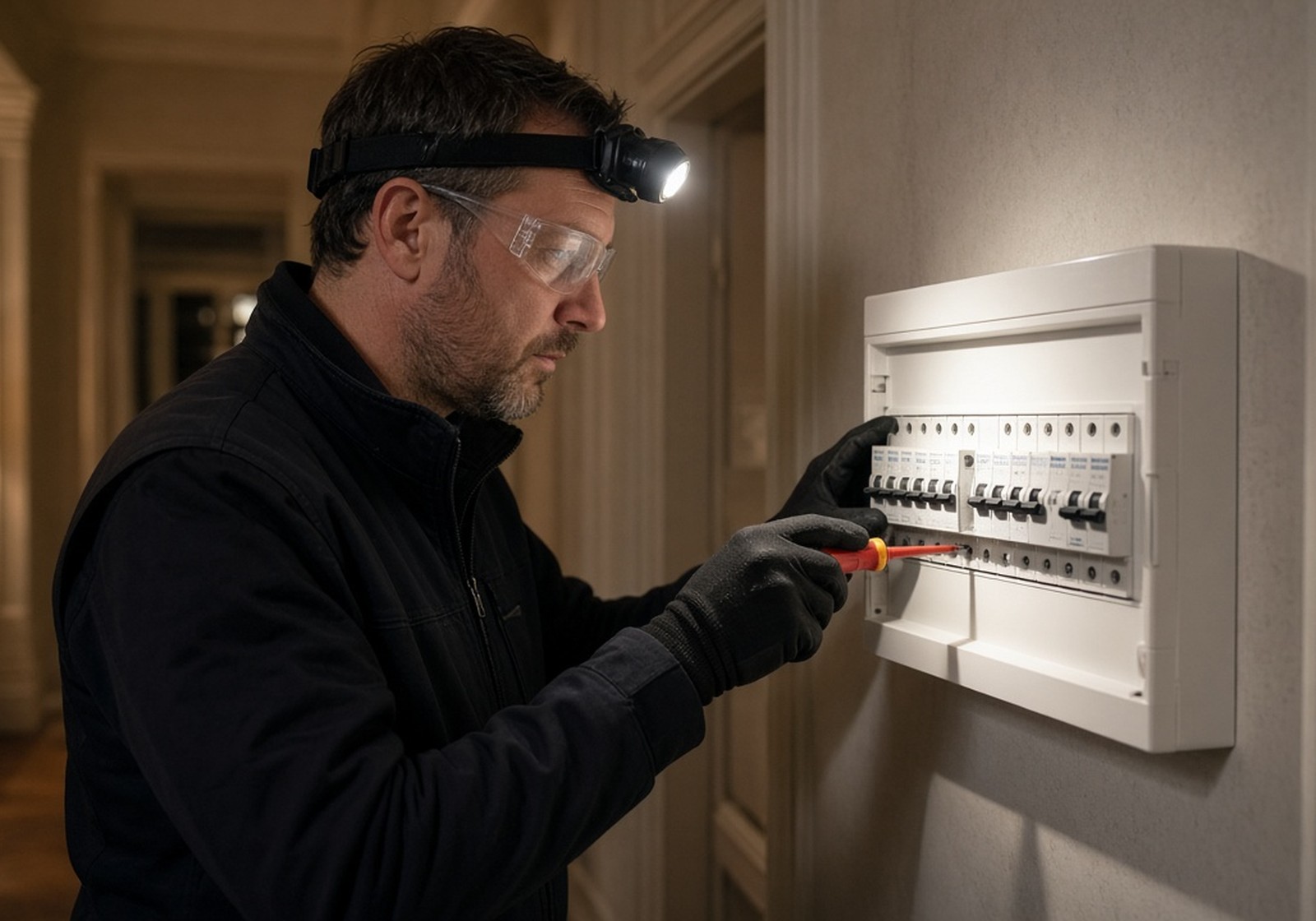






Emergency electrician in Bath checking a tripped consumer unit by headtorch
Locally Based · Open 24/7 · Bath, Somerset

Emergency Electrician Bath

Power Cuts, Tripping Fuse Boxes & Urgent Repairs

Emergency electrician in Bath, from a single scorched socket to a whole house without power, with safe isolation and testing before anything is switched back on.

  • BS 7671 Wiring Standard
  • 12-Month Workmanship Guarantee
  • Price Agreed First
  • Fully Insured

Request a Callback

Fill in the form below or call us now on 07893 943507

  • Yelp logo
  • Manta logo
  • MapQuest logo
  • Houzz logo
  • Clutch logo
  • ProvenExpert logo

What Does an Emergency Electrician Do?

An emergency electrician makes a dangerous electrical fault safe, finds what caused it and repairs it, at any time of day or night. That means isolating the danger, testing to find the real cause rather than just resetting a switch, repairing the damaged part and testing again before power is restored. If the whole street is off, the problem is the network: call 105, the free national power cut line.

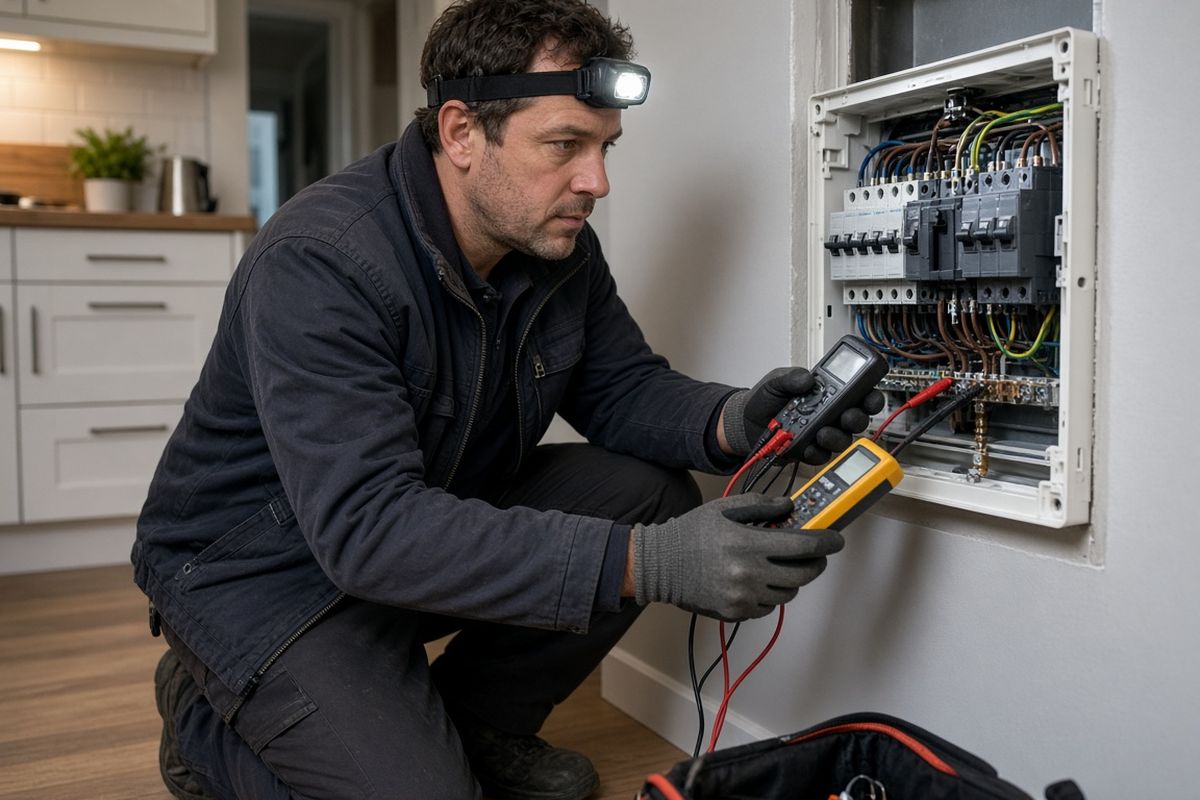
Electrician fault finding at a consumer unit with test meters
Warning Signs

Signs You Need an Emergency Electrician
in Your Bath Home

Electrical faults usually give warnings before they become dangerous. A burning smell, a hot socket, buzzing, flickering lights, repeated trips or water near the electrics are the usual clues. Any one of them is worth a call.

  • Burning Smell

    A smell of hot plastic or fishy burning near a socket, switch or the fuse box means something is overheating, even when you cannot see damage.

  • Scorch Marks & Sparks

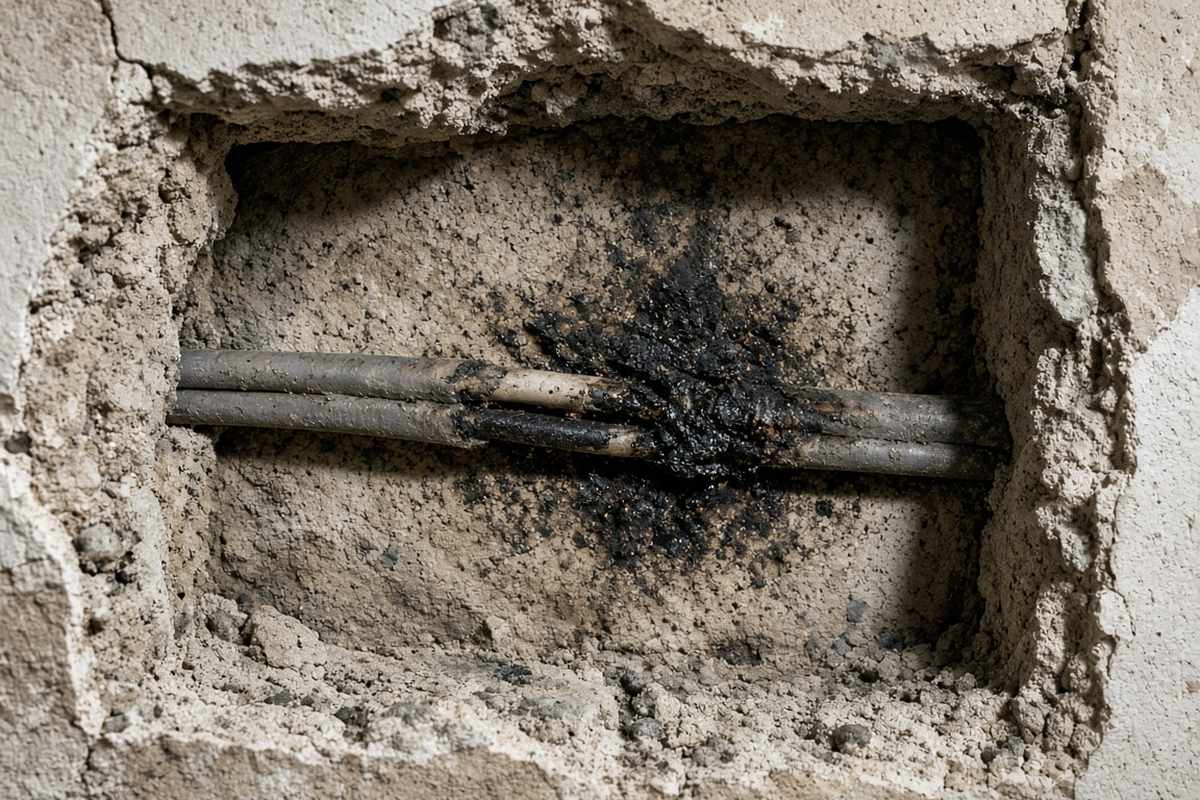
    Brown or black marks on sockets, switches or plugs, or sparks when something is plugged in or switched on.

  • Repeated Tripping

    An RCD or breaker that trips again as soon as you reset it, or will not reset at all, means there is a fault the protection is reacting to.

  • Buzzing & Flickering

    Buzzing from a socket, switch or the consumer unit, or lights that flicker and dim, often point to a loose or failing connection.

  • Water Near Electrics

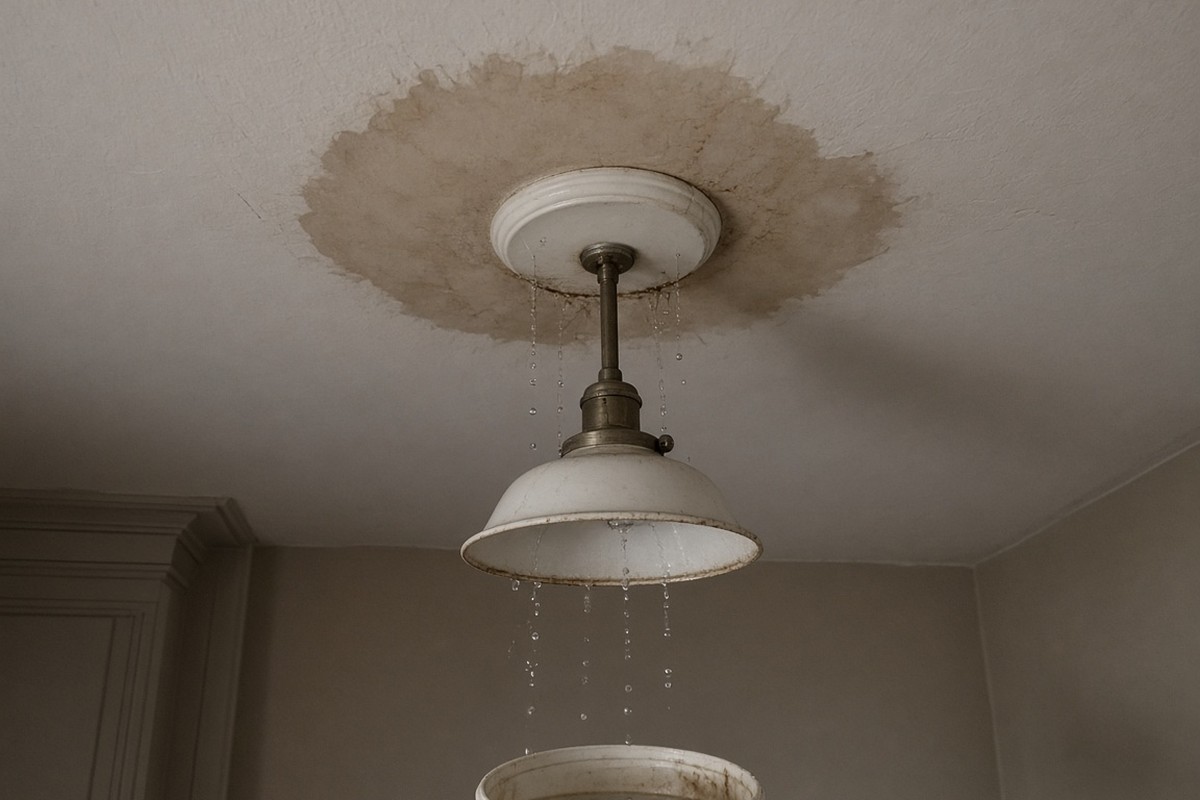
    Water dripping from a ceiling light, running down a wall past a switch or reaching the fuse box after a leak or flood.

  • No Power

    The whole house or part of it has no power while your neighbours are fine. If the street is off too, call 105 first.

Noticed one of these signs? We can make it safe and agree a price before any repair.

📞 Call 07893 943507
Bath, Somerset

Why Bath Homes Have
Their Own Electrical Problems

Electrical emergencies here usually trace back to the buildings themselves. Georgian and Victorian houses with wiring added over decades, cellars and vaults that take on water, and a lot of converted flats and rented homes all make a difference to how faults happen and how they are fixed.

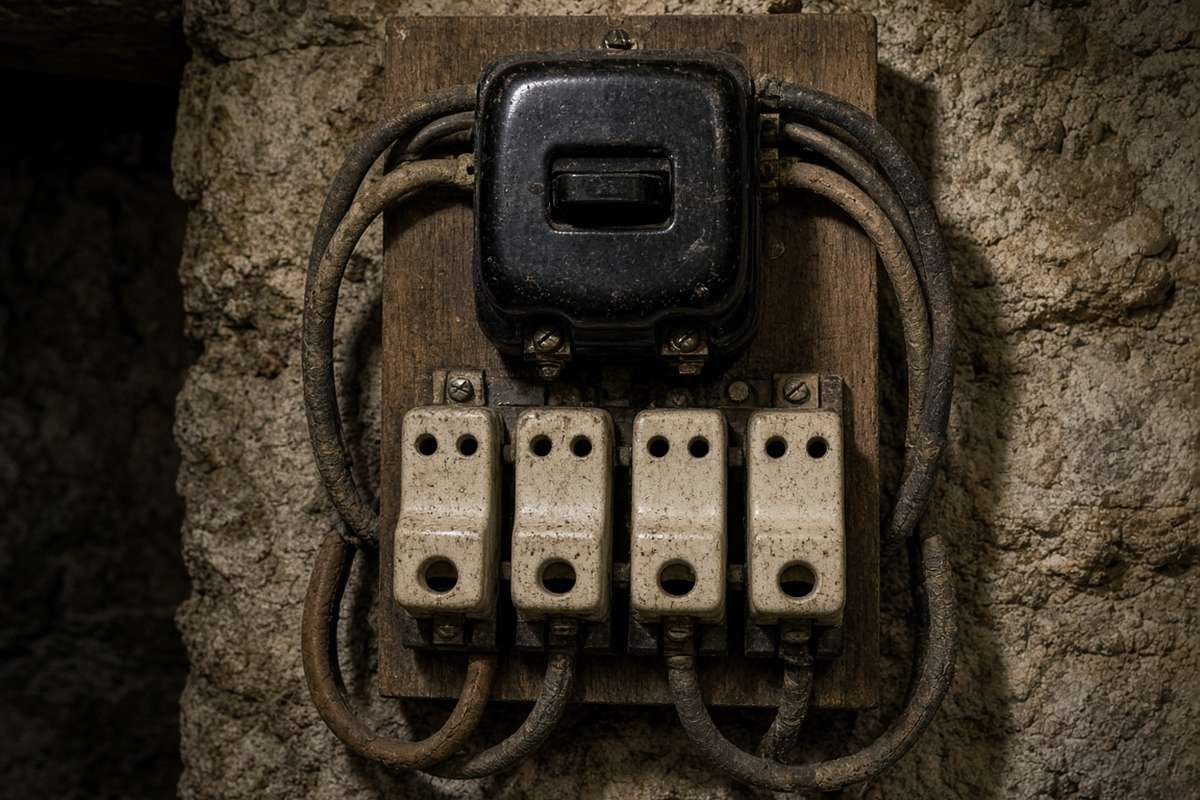
Old rewireable fuse box on a stone cellar wall in a Bath house

Georgian Townhouses and Listed Buildings

Bath is a UNESCO World Heritage city with around 5,000 listed buildings. Many have wiring from several decades, circuits extended floor by floor and joints hidden under floorboards. Bigger changes to a listed building can need consent from the council, so repairs follow existing routes where possible.

The result is circuits that are hard to trace, old fuse boards with no RCD protection and connections that have loosened over time. Fuse box and tripping repairs and consumer unit replacement cover the most common faults.
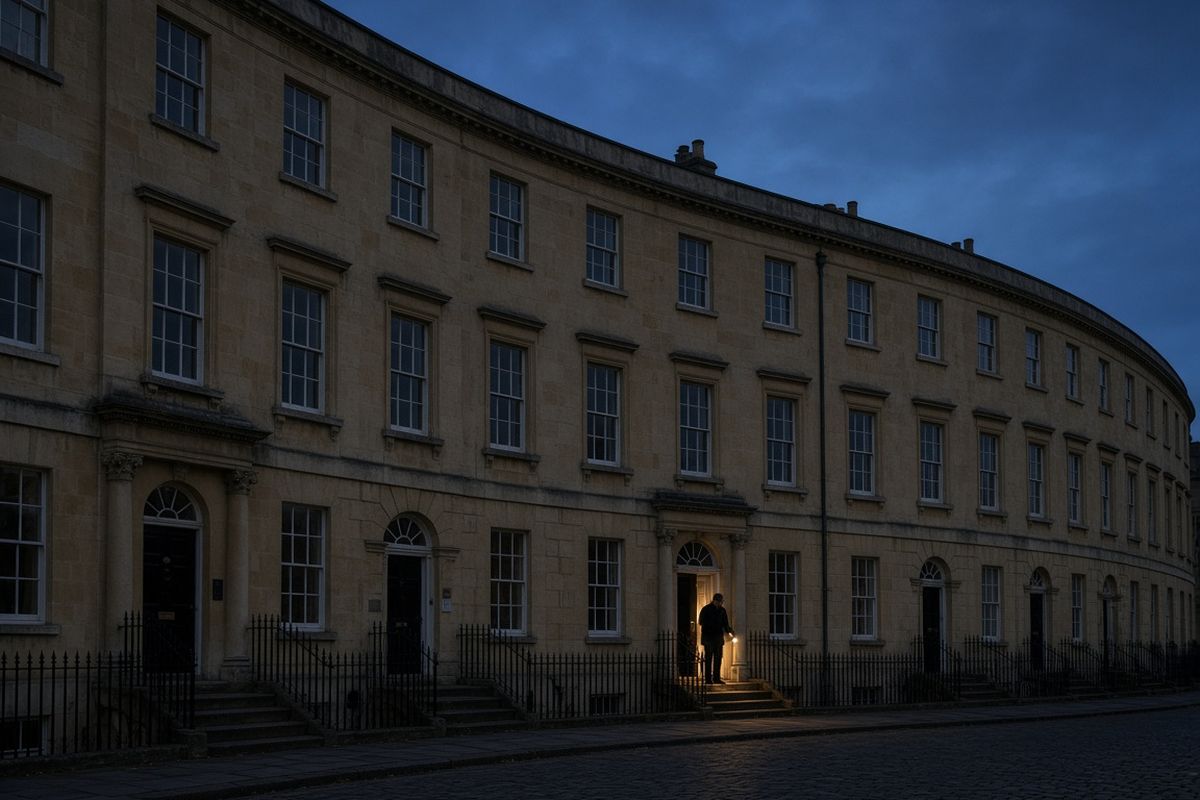
Bath stone Georgian terrace in darkness during a power cut

Cellars, Vaults and the River Avon

Many Bath homes have meters and fuse boards in cellars and vaults under the pavement, where damp and water can reach them. Electrics and water do not mix, and wet fittings must be isolated and tested before reuse, as Electrical Safety First advises.

After heavy rain or a leak, check flood risk with the GOV.UK long-term flood risk service, and if water reaches the electrics, keep the power off. See water-damaged electrics.

Water dripping from a ceiling light fitting after a leak

Converted Flats and Rented Homes

Flats in converted townhouses and student lets can have shared supplies, meters in basements and circuits that have been altered many times. Landlords in England must have the installation inspected at least every 5 years under the private rented sector regulations.

Landlords usually find problems at tenant changeover, during an EICR, or after a tenant reports a fault. Kitchen and bathroom electrical repairs and commercial electrical work cover rented and business properties.

Bath Property & Electrical Profile

What kind of homes Bath has, what that usually means for the wiring, and where water and heritage rules come into it. A general picture, not survey data; testing sets the condition of your own installation.

Property profile: Bath and the surrounding area (general description, not survey data)
MeasureBath (city)Surrounding towns and villages
Typical housingGeorgian terraces and townhouses in the centre and on the slopes, Victorian terraces in Oldfield Park, Larkhall and Twerton, inter-war and post-war homes in Weston, Odd Down and Combe Down, and newer estates on the edge of the cityVictorian and post-war homes in the market towns, stone cottages in the villages
HeritageUNESCO World Heritage city with around 5,000 listed buildings and a large conservation areaConservation areas in many villages; listed farmhouses and cottages
Common electrical issuesOld circuits extended floor by floor, damp cellars and vaults, converted flats with shared meters, too few socketsStorm power cuts, long supplies to outbuildings, older consumer units
Flood and waterThe River Avon runs through the city; some riverside streets, cellars and low-lying areas are at riskVaries by village; check the GOV.UK service for each address
Council for building control and listed building consentBath & North East Somerset CouncilB&NES, or Wiltshire Council for places such as Box, Corsham and Bradford on Avon
Rented homesA large private rented sector, including student lets and HMOs, where landlords need an EICR at least every 5 yearsFewer rentals, more owner-occupied homes and holiday lets
Typical responseWe are based in Bath and aim to reach city addresses as quickly as traffic allowsNearby towns and villages a short drive away

Water and electrics: what to check

River Avon and surface water
Riverside streets, cellars and vaults in Bath can take on water in heavy rain or high river levels. Meters and fuse boards are often in exactly those places.
Check your own address
Use the GOV.UK long-term flood risk service and sign up for flood warnings. If water reaches sockets, wiring or the consumer unit, keep the power off and get it tested.

If water is coming through a ceiling light or into a fuse box, switch off at the main switch only if you can reach it without touching anything wet, then call us.

What this means for electrics in Bath

  • Much of Bath is Georgian or Victorian, so wiring often dates from several decades and has been extended floor by floor. Testing, not the age of the house, shows whether it is safe.
  • Many buildings are listed. Repairs that follow existing routes rarely need consent, but bigger changes can, so we flag that before starting. See rewiring listed buildings in Bath.
  • Bath has many rented homes and student lets. Landlords must have the installation inspected at least every 5 years; see our landlord guide.
  • Cellars, vaults and riverside streets mean water is a common cause of electrical emergencies here. Never use electrics that have been wet until they have been tested.

Sources: Historic England National Heritage List; UNESCO: City of Bath; GOV.UK long-term flood risk; Bath & North East Somerset planning and building control. This profile is a general description, not survey data. Individual properties vary, and only testing shows the condition of a particular installation.

Safety Checks

Safe Checks:
DIY or Call an Electrician?

Call an electrician when there is a burning smell, heat, scorching, water near the electrics, or a trip that will not reset with everything unplugged. You can safely do a few simple checks yourself first, such as unplugging appliances and resetting the RCD, and checking whether neighbours have power.

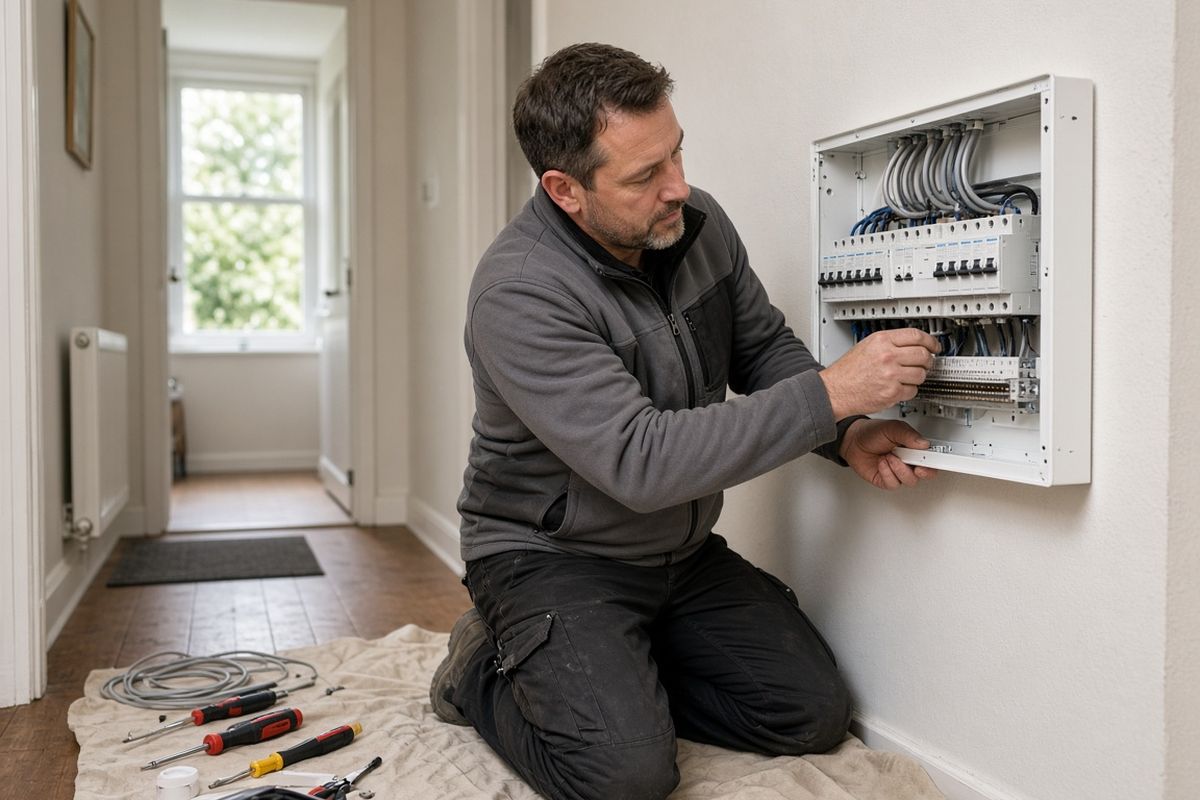
Electrician fitting a new RCBO consumer unit in a hallway
Past the safe checks: testing and repair at the consumer unit by an electrician.

Source: Electrical Safety First guidance for householders. Not sure which side of the line you are on? Call and describe what happened.

105

The National Power Cut Number

If your neighbours have no power either, the fault is on the network, not in your home. Call 105 free, or check the network operator's power cut map. An electrician cannot fix a network fault, so calling 105 first saves time and money. If only your home is off, check your consumer unit.

6 months

Test Your RCDs Every 6 Months

Press the test button on each RCD every 6 months. It should trip straight away; switch it back on afterwards. If it does not trip, or will not reset, the RCD may not protect you in a fault and should be checked. A home with no RCD at all is worth upgrading.

Never

Never Touch Wet Electrics

If water is coming through a light or near sockets, do not touch the switches or fittings. Switch off at the main switch only if you can reach it without touching anything wet, then call. Wet circuits stay off until they have dried and been tested.

EICR Codes

The 3 Codes Every Electrical Defect Is Measured Against

An EICR sorts every defect into one of 3 codes, and the code decides how urgently it must be fixed. A report that does not say which code applies, or why, is not much use.

  1. Code C3

    Improvement recommended

    The installation does not meet the current edition of BS 7671, but it is not dangerous. Many older homes have C3 items, such as no RCD on a lighting circuit. They are worth planning for, not an emergency.

    What it needs: No urgent action. Consider the improvement when other work is done.

  2. Code C2

    Potentially dangerous

    Something could become dangerous if a fault developed, such as a missing earth, damaged insulation or a socket with no RCD protection that could be used outdoors. It needs fixing promptly.

    What it needs: Repair as soon as possible. Landlords must complete C2 work within 28 days.

  3. Code C1

    Danger present

    There is a risk of injury now, such as exposed live parts or a scorched, overheating connection. This is what most people mean by "an electrical emergency".

    What it needs: Immediate action: isolate the danger before the electrician leaves, then repair and test.

Read the full guide: EICR codes C1, C2, C3 and FI explained.

EICR vs Emergency Fault Finding

An EICR tells you the condition of the whole installation; fault finding finds and fixes one problem. You do not always need both, and you rarely need a full EICR to fix a single fault.

EICREmergency fault finding
Question it answersIs the whole installation safe, and what needs improving?What is causing this fault, and how do we fix it?
What happens on siteInspection and testing of every circuit, with each defect coded C1, C2, C3 or FISafe isolation, testing of the affected circuits, repair and retesting
When you need itEvery 5 years for rentals, before buying an older house, or every 10 years for ownersA burning smell, trips that will not reset, no power, sparks or water in the electrics
What you getA written report with codes and recommendationsThe fault repaired, test results and a certificate for the work
Is the other always needed?No. A single fault can be fixed without a full EICRIf the fault finding shows wider problems, an EICR is the next step

Go deeper: EICR vs visual inspection · emergency vs regular electrician · why faults come back · our fault finding service

Emergency Electrical Services

Our Emergency Electrician
Services in Bath

Our work runs from fault finding that traces the real cause to getting a house with no power back on safely, for homes, flats, rentals and businesses across Bath and nearby. Every job starts with safe isolation and ends with testing and the right certificate.

Not sure which service you need? Call 07893 943507

Who We Work With

  • Homeowners Power cuts, tripping fuse boxes, burning smells, sparking sockets and water in the electrics.
  • Landlords & letting agents Rented homes and student lets that need fast repairs, tenant access and written test results.
  • Businesses Shops, offices, cafés, restaurants, B&Bs and holiday lets, with work planned around opening hours.
  • Historic properties Georgian and Victorian buildings in the World Heritage city, where lime plaster, stone and original features need careful work.
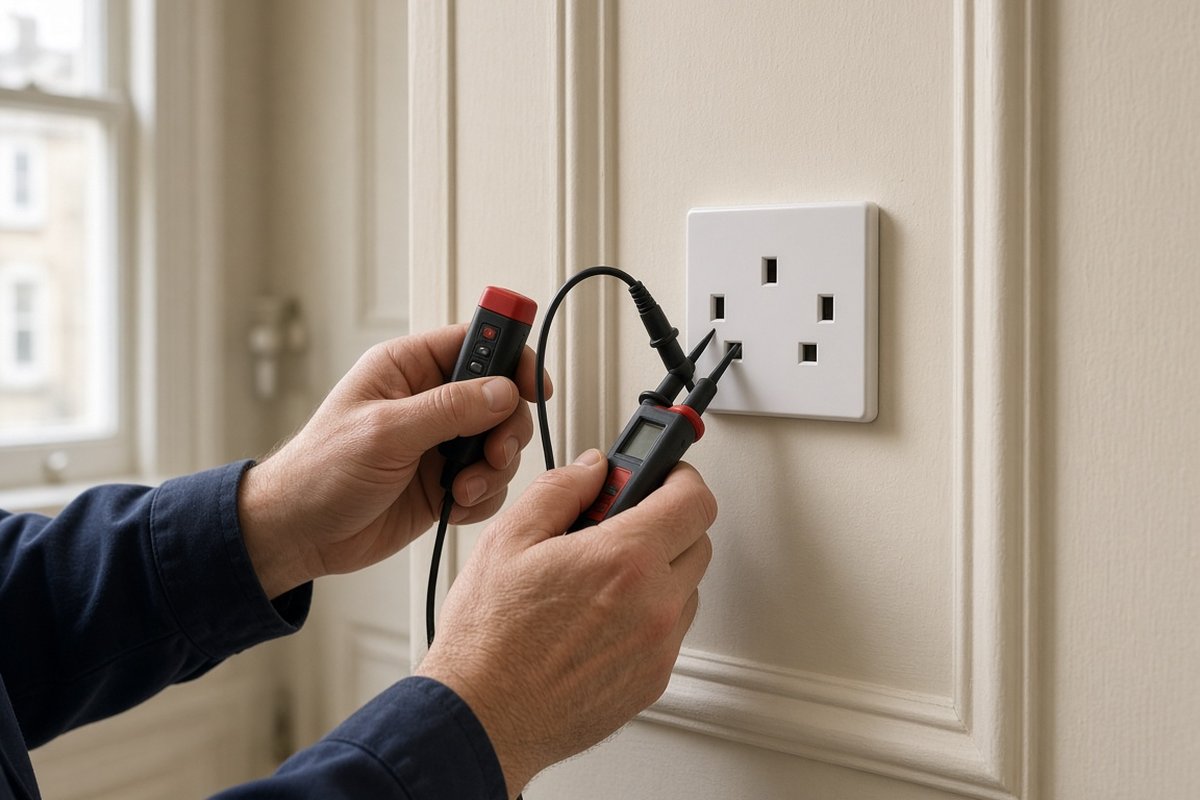
Electrician testing a socket in a period home in Bath

Electrical Fault Finding

Testing to find intermittent trips, flicker and hidden faults: insulation resistance, loop and RCD tests and thermal imaging. The point is to find the cause before anything is replaced.

Explore Service

More services: Consumer Unit ReplacementWater-Damaged ElectricsCommercial Emergency Electrician All services →

Smell Burning? Call Before It Gets Worse.

An overheating connection keeps getting hotter while it stays in use. Call, tell us what you can see, smell or hear, and get an emergency electrician in Bath on the way.

On-site estimate 07893 943507
6-Step Process

How an Emergency Call-Out Works
(BS 7671 & Safe Isolation)

Every call-out moves through triage, making safe, finding the fault, repair, and testing before power is restored, following BS 7671, the IET Wiring Regulations, and safe isolation practice. Simple faults are usually fixed in 1 to 2 hours; hidden faults can take longer. Read the full process.

  1. Step 1: Triage on the Phone

    We ask what has stopped working, what tripped and whether there is a smell, heat or water. You get safety advice straight away, and a realistic arrival time and price guide. If the whole street is off, we tell you to call 105.

  2. Step 2: Make It Safe With Safe Isolation

    On arrival, dangerous circuits are switched off, locked off and proved dead with a tester checked on a known live source. Circuits that are safe are kept on, so the rest of the house can be used.

  3. Step 3: Find the Fault by Testing

    Each circuit is tested, starting with insulation resistance tests to find current leaking to earth. The faulty circuit is narrowed down section by section until the cause is found, following BS 7671.

  4. Step 4: Repair the Cause

    Once you have agreed the price, damaged sockets, switches, cable ends or devices in the consumer unit are repaired or replaced, and loose connections are remade correctly. If it is an appliance, we tell you.

  5. Step 5: Test, Restore and Certify

    The repaired circuit is tested before power is restored, and you receive the right certificate for the work. Notifiable work is notified under Part P, and anything else we noticed is written down for you.

Guidance & Business Details

Find the Right Starting Point

Choose a service by the problem you need to solve, then check the guidance behind the proposed work.

Read the Relevant Guidance

Choose Your Next Step

Business Details You Can Check

Owner
Written by the Emergency Electrician Bath team. About us.
Written guarantee
Completed repairs come with a 12-month written workmanship guarantee. Read coverage, exclusions and how to claim.
Electrician paperwork
Before work starts, ask your electrician which competent person scheme or building control route they will use for notifiable work, and for proof of public liability insurance. Check an electrician on the Electrical Competent Person register.
Your job paperwork
Ask for an itemised quote, a note of what was found and the test results for any circuit we work on. Use the written-quote checklist.
Why Us

Why Property Owners
Choose Emergency Electrician Bath

Emergency Electrician Bath is based in Bath and works with local homes, landlords and businesses. Our work follows BS 7671, the IET Wiring Regulations, and every repair is tested before power is restored.

A Local Bath Electrician, Not a Call Centre

Calls to 07893 943507 reach a local electrician, not a national referral line that passes your number to several contractors. The electrician who answers knows Bath's older houses, cellars and converted flats.

Registration, Insurance & Price Checks

Use the Electrical Competent Person register to check any electrician's registration before work starts. Ask for proof of insurance, and get the price agreed before any repair.

Experience With Period and Listed Homes

Older Bath homes need a different approach: lime plaster instead of plasterboard, original cornices and joinery worth protecting, and cable routes that have been used for generations. We follow existing routes, lift floorboards carefully and make the smallest possible mark.

Talk to a local emergency electrician in Bath Bath, Somerset · Open 24 hours · Price agreed first
Call 07893 943507

No Scare Tactics or Pointless Upgrades

A new consumer unit does not fix a fault on a circuit. Replacing parts without testing just moves the problem, and an unnecessary rewire is expensive. We test, find the cause and fix that first.

What we don't do
  1. Call every old fuse box "a fire waiting to happen"
  2. Sell a new board or rewire as the fix for every fault
  3. Quote a large price before testing anything
  4. Reset a trip without finding the cause
  5. Switch circuits back on without testing them
What we do
  1. Explain what we found in plain English
  2. Isolate safely, test and repair the actual fault
  3. Agree the price with you before the repair
  4. Find and report the cause of the fault
  5. Test every repaired circuit before power is restored
Indicative Bath Prices

How Much Does
an Emergency Electrician Cost?

Use these indicative ranges to plan for an emergency electrician in Bath. They are planning figures, not a quote, and the price for your job is agreed before any repair starts.

First hour (weekday)

£80-£140 typical first-hour charge

Then charged by time plus parts

Evenings, nights and weekends cost more.

First hour (out of hours)

£120-£180 typical first-hour charge

Evenings, nights, weekends and bank holidays

Confirm the rate before the visit.

These are indicative ranges for Bath in 2026, not a fixed price list. Electricians charge in different ways, so ask for the first-hour charge and rate after that. The size cards and job table below use the same ranges as our emergency electrician cost guide.

Small Job

£80-£200

Up to about 2 hours on site

  • A tripped RCD, a scorched socket or a single fitting
  • Confirm the first-hour charge
  • Confirm parts and testing are included
  • Ask whether certificates are included
Get My Price

Large Job

£450-£1,800

A full day or more; often planned work

  • A consumer unit replacement or several circuits
  • Ask whether Part P notification is included
  • Separate the emergency repair from upgrades
  • Itemise making good of plaster and decoration
Get My Price

Indicative Prices by Type of Job

JobIndicative rangeWhat to confirm
Fault finding (first hour) £80-£180 Minimum charge, hourly rate after that, and evening or weekend rates.
Socket or switch replacement £60-£150 Number of fittings and whether the cable behind needs repair.
Tripping RCD or breaker repair £90-£350 How long tracing takes and whether a device needs replacing.
Burning smell or scorched socket £90-£400 How far heat damage goes along the cable.
Consumer unit replacement £450-£1,100 Number of circuits, RCBOs, Part P notification and certificate.
Electric shower circuit repair £90-£600 Isolator and terminals only, or a new cable sized for the shower.
Water-damaged electrics £120-£900+ Return visit to retest after drying, and parts replaced.
EICR (2 to 3 bed home) £150-£320 Written report included; remedial work priced separately.

Planning assumptions: emergency work is usually charged by time plus parts, with a minimum first-hour charge. Making good of plaster, decoration and follow-up upgrades are usually separate, so confirm what your price includes.

Worked example: a hidden fault that takes 2 hours to trace and repair on a weekday might cost about £140 to £220 plus parts. The same job at night costs more. These are illustrations, not quotes.

What Affects Your Emergency Electrician Price

Two jobs with the same symptom can land far apart on price. These are the things that move it, and our cost guide goes through each one in detail.

  1. How hard the fault is to find. Time is the biggest cost driver: a fault found on the first test is quicker than an intermittent one.
  2. Location and access. Floor voids, lofts, cellars and fitted kitchens take longer than an open socket on a wall.
  3. Repair or replace. A loose connection is remade; scorched sockets, damaged cable and failed devices are replaced.
  4. Time of day. Evenings, nights, weekends and bank holidays usually cost more than normal working hours.
  5. The cause. A faulty appliance is quick; a cable damaged by a nail, rodents or water takes longer.
  6. Consumer unit involvement. A single device can be replaced; an unsafe old board may need replacing.
  7. Age and construction of the home. Lime plaster, stone walls and listed features in Georgian homes need slower, gentler methods.
  8. Making good. Plastering and decorating after a repair are often a separate line. Ask whether your price includes them.
📞 Get a Clear Price
Insurance & Electrical Damage

Does Home Insurance Cover
Electrical Damage?

Sometimes, when the damage followed a sudden insured event your policy covers, such as a leak from a flat above, a storm or a fire. Wear and tear and old wiring are usually excluded, and some policies include home emergency cover for call-outs.

Usually covered

  • Electrics damaged by a sudden escape of water, such as a burst pipe
  • Damage from a fire or a storm covered by the policy
  • Accidental damage, if your policy includes it
  • A call-out under home emergency cover, when the policy includes it

Usually not covered

  • Wear and tear and old wiring breaking down
  • Faults from DIY or unregistered electrical work
  • Flooding, unless the policy covers flood
  • Gradual damage from slow leaks left unrepaired
  • Faulty appliances, unless separately insured

5 steps to document a claim

  1. Make it safe, then take dated photos and video of the damage and the cause.
  2. Call your insurer within 24 hours and get a claim number.
  3. Keep damaged parts until the insurer says they can go.
  4. Save the electrician's report, test results and invoices.
  5. Ask your insurer whether your policy has home emergency cover.

Cover depends on your exact policy wording. We provide photos, test results and an itemised invoice you can send to your insurer. See water-damaged electrics and does home insurance cover electrical damage.

UK Rules

UK Electrical Safety Rules
Property Owners Should Know

Check these 7 topics when planning electrical work: registration, Part P, certificates, selling, rentals, listed buildings and building control. Official references are linked below.

No Single Licence: Why Competent Person Registration Matters

England has no single licence for electricians. Electricians who self-certify notifiable work must be registered with a government-approved competent person scheme. Check the register before work starts.

  • Electrical Competent Person register
  • GOV.UK: Approved Document P (electrical safety in dwellings)

Part P and Notifiable Work

Installing a new circuit, replacing a consumer unit and some work in bathrooms are notifiable. A registered electrician notifies it for you, and you receive a Building Regulations compliance certificate.

  • GOV.UK: Approved Document P (electrical safety in dwellings)

Electrical Work When Selling a Home

The TA6 Property Information Form asks sellers about electrical work since 2005 and whether certificates are available. Answer it accurately and keep your certificates together.

  • Law Society: TA6 Property Information Form

Rented Homes: Landlord and Tenant Responsibilities

Private landlords in England must have the electrical installation inspected and tested at least every 5 years, give tenants the report and complete required work within 28 days. Tenants should report faults in writing.

Listed Buildings and Historic Fabric

Bath has around 5,000 listed buildings. Electrical work that affects the character of a listed building, such as new surface wiring or chasing historic plaster, may need listed building consent from the council.

References checked November 2026. Use the linked bodies for current requirements and property-specific decisions. Full guide: UK electrical safety regulations.

Prevention

Electrical Safety Checklist for Bath Homes

Most electrical emergencies give warnings first, so prevention is a checklist. These are the checks that catch most problems before they become call-outs. Print it, or keep it on the fridge.

Every month

  • Feel plugs and sockets you use for heavy appliances. Warm is a warning; hot means stop using it and call.
  • Check extension leads for damage and do not plug one into another.
  • Look at sockets and switches for scorch marks, cracks or loose faceplates.
  • Keep the area around the consumer unit clear so it can be reached quickly.

Every 6 months

  • Press the test button on each RCD; it should trip straight away. Switch it back on afterwards.
  • Check smoke alarms work, and that mains-wired alarms show their green light.
  • Look at outside sockets and lights for water getting in, cracked covers or rust.
  • Look in the loft for damaged cable, rodent damage and lights buried under insulation.
  • Note what each breaker in the consumer unit controls, and label it if it is not marked.

Winter (November to March)

  • Do not run several heaters from one socket or extension lead.
  • Keep portable heaters away from curtains, bedding and furniture.
  • Check outside lights and garden sockets before the wet weather sets in.

Every 10 years (or on moving in)

  • Have an EICR carried out on an owner-occupied home, or every 5 years if you let it.
  • Keep certificates for any electrical work in one place for when you sell.
  • Know where your main switch and meter are, and how to switch off in an emergency.

After any leak or flood

  • Switch off at the main switch if you can do it safely, and keep away from wet electrics.
  • Stop the water, photograph everything and call your insurer.
  • Do not switch wet circuits back on. Get them dried and tested by an electrician first.

Related: overloaded sockets and extension leads · winter heater overload · outside lights tripping in rain · holiday lets and empty homes

40 Service Areas · Bath, Somerset

Where We Work
Bath and Nearby Towns & Villages

We are based in Bath, and our service extends beyond the city. We cover central Bath and its neighbourhoods, and nearby towns and villages from Keynsham and Saltford to Bradford on Avon, Box and Frome. Not on the list? Call and ask.

Emergency Electrician Bath Bath, Somerset, UK 07893 943507 · Open 24 hours
Get directions
Further Reading

58 Electrical Guides for Bath Homes

Plain answers to the specific questions people ask before they call anyone. Start with the one that matches what you are seeing.

Browse all guides on the blog · Emergency electrician cost guide

Common Questions

Frequently Asked Questions
About Emergency Electricians

9 questions Bath property owners ask before calling an emergency electrician: response, power cuts, tripping, burning smells, registration, cost and certificates. Direct answers first. More questions are answered on the full FAQ page.

How quickly can an emergency electrician get to me in Bath?

We aim to reach most Bath addresses within about an hour of your call, depending on traffic, the time of day and jobs already in progress. We give you a realistic arrival time when you call and tell you how to stay safe until we arrive.

Is a burning smell from a socket an emergency?

Yes. A burning or fishy smell from a socket, switch or the consumer unit usually means something is overheating. Stop using it, switch off the circuit at the consumer unit if you can do it safely, and call. If there is smoke or fire, leave the building and call 999. Electrical Safety First has more advice.

What should I do if my power goes off?

Check whether your neighbours have power. If they do not, call 105, the free power cut number. If only your home is off, look at the consumer unit: if a switch has tripped, unplug everything on that circuit and try resetting it. If it will not reset, or trips again, call an electrician.

Do electricians need to be registered in England?

There is no single licence, but electricians who self-certify notifiable work under Part P must be registered with a government-approved competent person scheme. You can check the Electrical Competent Person register.

What is the difference between an RCD and a fuse?

A fuse or circuit breaker protects the cable from overload. An RCD protects people: it switches off in a fraction of a second if current leaks to earth, for example through a person or water. Modern consumer units have both. See RCD vs RCBO explained.

Why does my fuse box keep tripping?

Usually because of a faulty appliance, water in an outside light or socket, damaged cable, or an overloaded circuit. Unplug appliances and try resetting. If it still trips, the fault is in the wiring and needs testing. See how to find what is tripping your electrics.

Do I need building control approval for electrical work in Bath?

Only for notifiable work, such as a new consumer unit or new circuit. A registered electrician notifies it for you. Work on a listed building may also need consent from Bath & North East Somerset Council.

Can an electrical fault come back after a repair?

Yes, if the cause was not found. Resetting a switch without testing, or replacing a part without finding why it failed, leaves the fault in place. Repairs last when the cause is found and the circuit is tested afterwards. See why electrical faults come back.

What if I cannot afford the full repair right now?

Get the installation made safe first, because that cannot wait. Then ask for the remaining work to be quoted separately, so you can plan when to do it. Do not use extension leads to work around a dead circuit.