
Rewiring Old Lime Plaster Walls in Bath Homes: Plaster, Lath and Stone
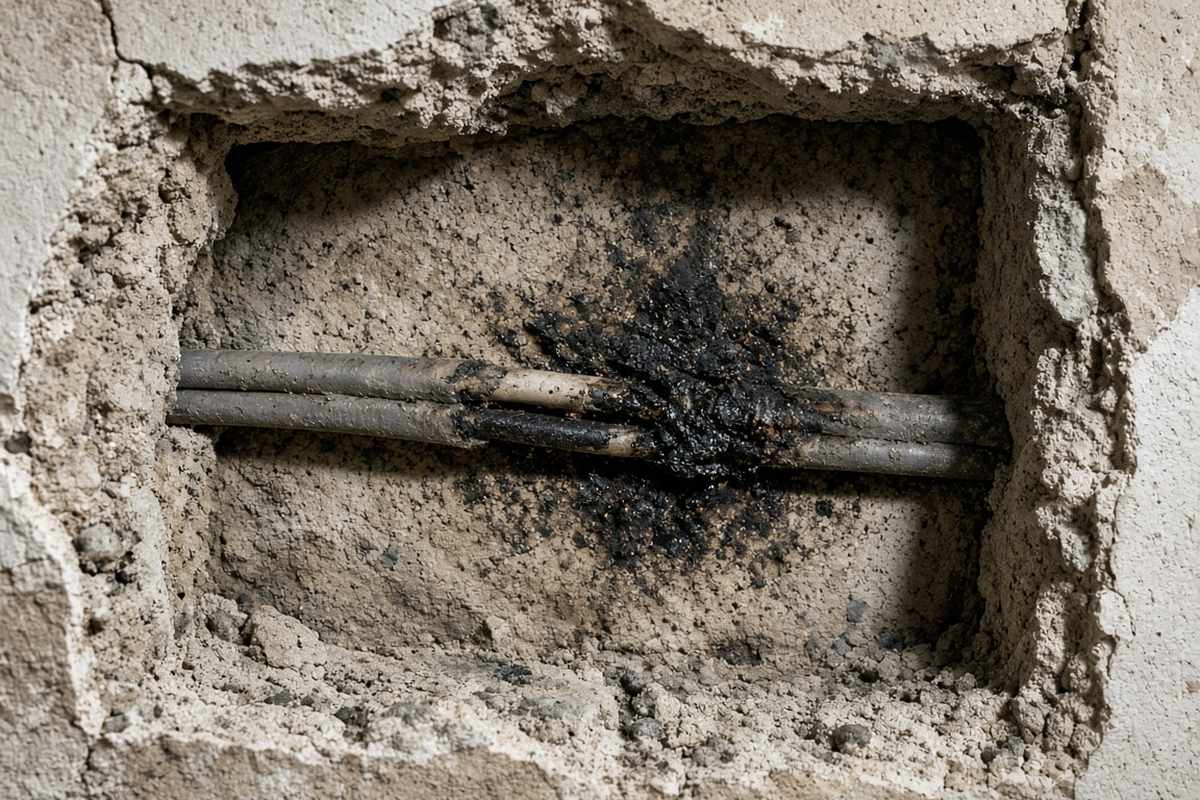
Many Bath homes have lime plaster on lath or on stone, not modern plasterboard. Lime plaster is softer, more flexible and more fragile than gypsum, and it is often original and worth keeping. This guide explains how electricians add sockets or rewire in walls like these, which cable routes cause the least damage, and how to plan the work so the plaster survives.
Why Lime Plaster Needs a Different Approach
Lime plaster was used in British houses until the early twentieth century. In Bath, it is found on lath in partition walls and ceilings and directly on stone in external walls. It is breathable, which helps old buildings manage moisture, and it moves slightly with the building. It is also easy to crack and can come away from the lath if it is hammered or chased carelessly.
Modern electrical methods assume plasterboard or gypsum plaster on block walls. Cutting deep chases with a wall chaser, hammering in back boxes or drilling with heavy vibration can loosen large areas of lime plaster or crack a ceiling. Repairs then need specialist plasterers using lime, which costs more than the electrical work.
Lath-and-Plaster Versus Plaster on Stone
| Wall type | Where found | Electrical considerations |
|---|---|---|
| Lime on timber lath | Internal partitions, ceilings | Hollow behind; cable can be dropped down without chasing |
| Lime directly on stone | External walls, party walls | Solid and uneven; chasing is hard and damaging |
| Later gypsum skim over lime | Patch repairs, refurbished rooms | Mixed surfaces; skim can debond from lime |
| Modern plasterboard | Extensions, loft conversions | Standard methods usually fine |
Finding out which you have
Tap the wall. Lath-and-plaster sounds hollow and slightly springy. Plaster on stone sounds solid. In a listed building or a house with original features, it is worth checking before planning any work.
Planning Routes Before Cutting Anything
The best way to protect lime plaster is to avoid chasing it. Electricians experienced with older houses plan cable routes around the building:
- Drop cables down lath-and-plaster walls. In hollow partitions, cable can often be fed from the floor void above or below to a new socket position without opening the wall.
- Use existing routes. Old cables can sometimes be used to draw new cable through the same route.
- Run in floor and ceiling voids. Lifting floorboards in the room above avoids cutting ceilings.
- Follow skirting boards and architraves. Cable can sometimes be run behind skirting boards or architraves that can be removed and refitted.
- Use surface trunking in suitable places. In cupboards, cellars and service areas, neat surface trunking may be better than chasing historic plaster.
Fitting Sockets and Switches
Back boxes for sockets usually need a hole in the plaster. On lath, the hole is cut carefully with a fine saw or multi-tool, not hammered, and the box is fixed to a batten or uses dry-lining box fixings. On stone, a shallow box or a surface pattress may avoid cutting into the stone.
Some homeowners choose surface-mounted sockets in period rooms, especially on stone walls or where the plaster is decorated. Others prefer flush sockets for appearance. Both can be done safely; it is about balancing appearance against damage to the plaster.
When Chasing Is Unavoidable
Sometimes there is no route other than chasing. When that happens:
- The chase is cut by hand or with low-vibration tools, not a heavy wall chaser.
- The chase is kept as short and shallow as the regulations allow.
- Cables in walls are run in the permitted safe zones, or protected by RCD and mechanical protection where required.
- The chase is made good with lime-based plaster, not gypsum, so the wall continues to breathe and the repair bonds properly.
Making good with lime
Gypsum plaster does not bond well to lime and can trap moisture. A plasterer experienced with lime should make good chases in historic walls. Ask about this when getting quotes, because it changes the price.
Listed Buildings and Consent
Bath has around 5,000 listed buildings. Work that affects their character, such as chasing historic plaster, removing original features or adding visible surface wiring in principal rooms, may need listed building consent from Bath & North East Somerset Council. Like-for-like repairs and work in areas of low significance often do not, but check first. See rewiring listed buildings in Bath.
Protecting Cornices, Ceiling Roses and Shutters
Ceiling roses, cornices and shutter boxes are part of what makes a Bath room special. When replacing a light fitting, the ceiling rose can often be left in place with a new fitting mounted through it. Cornices should never be cut for cables; routes are planned through the floor above instead. Shutter boxes are not a cable route.
Old Cable in Old Walls
Lime-plastered walls often contain old cable types. Rubber-insulated cable becomes brittle and can crumble when disturbed. If you are adding a socket to an old circuit, the existing cable should be tested first. Sometimes the right answer is to replace a circuit rather than extend it. See signs your house needs a rewire.
Damp and Electrics in Stone Walls
External stone walls in Bath can be damp, especially in cellars and basements. Sockets mounted on damp walls corrode faster. Use surface boxes with a gap behind them in damp areas, and avoid placing sockets low on walls that show damp. See cellar electrics in Bath Georgian homes.
Frequently Asked Questions
Can I add sockets without damaging lime plaster?
Usually, yes. In lath-and-plaster partitions, cable can often be dropped down from above. On stone walls, surface sockets or short, carefully cut chases are options.
Is gypsum plaster OK for making good?
It is not recommended on lime. Lime-based plaster bonds better and lets the wall breathe.
Will a rewire ruin my period features?
It does not have to. Careful planning, existing routes and lifting floorboards rather than cutting ceilings protect most features.
How long does it take?
Longer than in a modern house, because work is slower and more careful. See how long does a rewire take?
Planning Work in a Period Home?
Talk to us about your property. We follow existing routes and protect historic plaster wherever possible. See our consumer unit replacement service or contact us.