
Electrical Safety for Children and Older Adults: Practical Steps at Home
Young children and older people are more likely to be hurt by electrical accidents at home. Children are curious and do not recognise danger; older people may live with old wiring, rely on heaters and medical equipment, or find it harder to notice a warm socket or reach the consumer unit. This guide goes through the hazards room by room and the simple changes that make a home safer for both.
Why These Groups Are More at Risk
| Group | Main risks |
|---|---|
| Babies and toddlers | Chewing cables, poking objects into appliances, pulling leads, bath-time hazards |
| Older children | Using appliances unsupervised, chargers in beds, water and electrics |
| Older adults | Old wiring, overloaded sockets, heaters, trailing leads, slower reaction to warning signs |
| People with dementia | Forgetting appliances are on, using unsafe appliances |
| People with medical equipment | Dependence on power; risk during power cuts |
Living Areas
- Keep leads tidy and out of reach. Trailing leads are a trip hazard for older people and a pulling hazard for children.
- Do not overload sockets or use cheap block adaptors.
- Keep heaters well away from furniture, curtains and children's toys, and use heaters with tip-over protection.
- Check for warm sockets, scorch marks or plugs that fall out.
Kitchens
- Keep kettle flexes short and at the back of the worktop.
- Do not let children use appliances unsupervised.
- Switch off and unplug appliances when not in use, especially toasters.
- Make sure the cooker control switch is easy to reach.
Bathrooms
Water and electricity are a dangerous combination. Bathrooms should have RCD protection, pull-cord or outside switches, and no ordinary sockets. Never bring hair dryers, heaters or extension leads into a bathroom. See bathroom extractor fan wiring and zones.
Bedrooms
- Do not charge phones, tablets or e-cigarettes in beds or under pillows.
- Use only the charger supplied, or a reputable replacement.
- Electric blankets should be checked regularly and replaced if damaged or older than 10 years.
- Nightlights and lamps should be in good condition and away from bedding.
Socket Covers
Electrical Safety First and other bodies advise against using socket covers. UK sockets have built-in shutters that prevent objects being pushed into the live holes. Some poorly made covers can actually open the shutters or damage the socket. A better approach is to keep appliances and leads out of reach and supervise young children.
RCD Protection
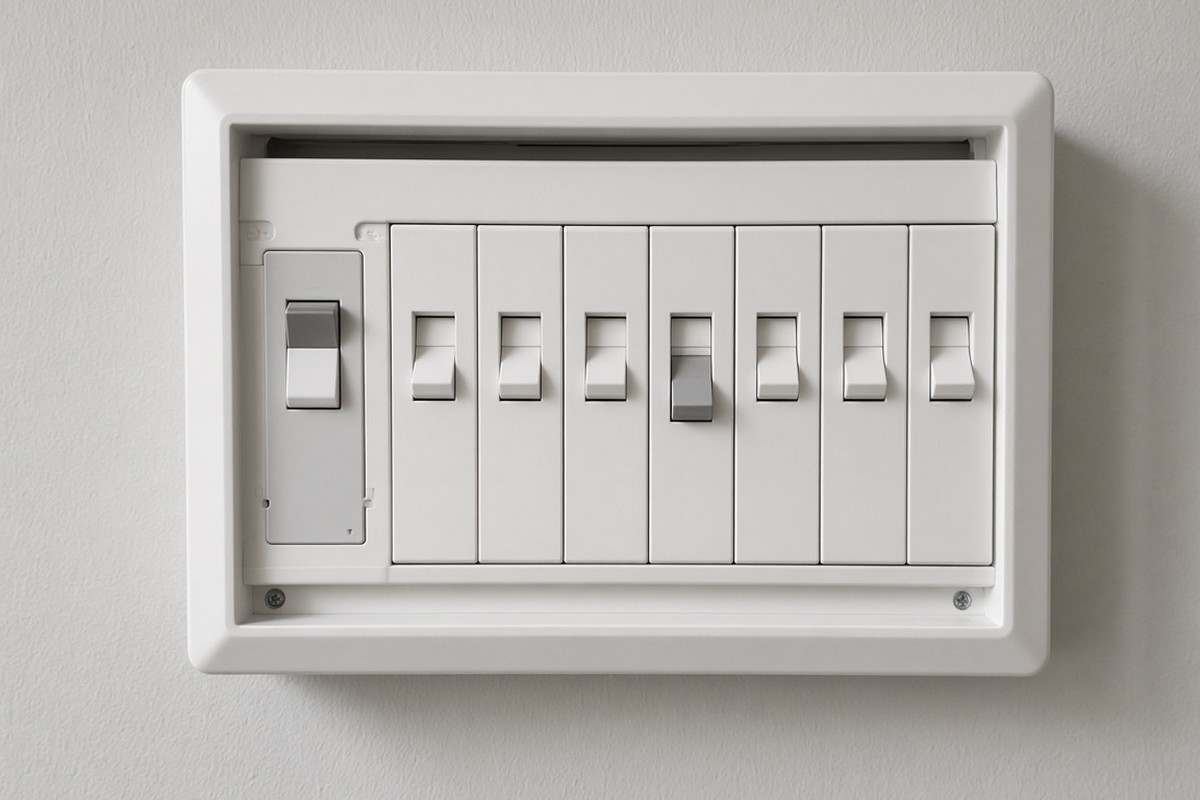
An RCD switches off the power within a fraction of a second if current leaks to earth, for example through a person. Homes with children or older people should have RCD protection on all socket circuits. Test RCDs every six months using the test button. If your home has no RCD, consider a consumer unit replacement.
Old Wiring in Older People's Homes
Many older people have lived in the same home for decades, and the wiring may not have been checked in that time. Signs to look for:
- An old fuse box with rewireable fuses.
- Sockets on skirting boards or few sockets per room.
- Extension leads used everywhere.
- Scorched sockets or warm plugs.
- Lights that flicker.
An EICR shows whether the installation is safe. Family members can help arrange one. See signs of dangerous wiring.
Heaters and Electric Blankets
Older people are more likely to use portable heaters and electric blankets. Use heaters with thermostats and tip-over protection, plugged directly into the wall. Check electric blankets for damage before winter. See winter electrical overload.
Power Cuts and Medical Equipment
Anyone who relies on electricity for medical equipment, stairlifts or heating should join the Priority Services Register with their network operator. Keep a torch within reach and a list of emergency numbers by the phone. See power cut: what to do first.
Smoke Alarms
Fit smoke alarms on every floor and test them monthly. Interlinked alarms sound throughout the house. For people with hearing loss, vibrating or flashing alarms are available.
Frequently Asked Questions
Should I use socket covers?
Most safety bodies advise against them, because UK sockets have built-in shutters.
How can I make an elderly relative's home safer?
Check for old wiring, overloaded sockets and heater safety, and arrange an EICR.
Are phone chargers dangerous?
Cheap or damaged chargers can overheat. Do not charge in beds.
How often should RCDs be tested?
Every six months using the test button.
Worried About an Older Relative's Electrics?
We carry out safety checks and repairs across Bath. Contact us.